| Phishing and lookalike domains threaten business trust and lead flow. Tracking domain news and using global domain search helps brands stay safe, spot naming opportunities, and optimise investment decisions. |
Global domain market news is no longer trivia; it shapes how SMEs, agencies, and tech-savvy teams protect brands, stay discoverable, and invest wisely.
Losing a prized domain to a lookalike competitor or missing a new extension can undermine trust and cost you leads. Many SMEs struggle to monitor the fast-changing domain space with limited resources.
The solution? To monitor global domain market news closely!
It gives timely alerts to help you identify risks early and catch naming trends before rivals do. Plus, it enables proactive defence and strategic growth in a crowded online marketplace.
This blog shows how to decode domain market signals for optimal brand safety, opportunity spotting, and smarter investment through an effective global domain search.
Why SMEs Should Monitor Global Domain Trends
SMEs should track domain news for four intertwined reasons:
- They want to block phishing or lookalike sites that erode customer trust.
- They hunt for fresh naming opportunities, local ccTLDs or industry gTLDs that lift market fit and SEO.
- Tight budgets force a choice between high-value domain investment and cheaper defensive registrations.
- Teams need simple monitoring and governance workflows that anyone, not just the IT lead, can run.
From a business standpoint, these intents translate into tangible goals:
• Preserve brand trust and generate qualified leads by reducing fraud exposure.
• Educate decision-makers so budget flows to domains with measurable upside.
• Expand brand awareness in new regions through informed ccTLD choices.
How Global Domain Market Trends Change Naming Strategy and Discoverability
Domain news headlines often announce fresh extensions, AI-driven search shifts, or speculative Web3 launches. Each headline hints at new rules for naming strategy and the mechanics of a global domain search.
Market Diversification: gTLDs, ccTLDs, Niche Extensions
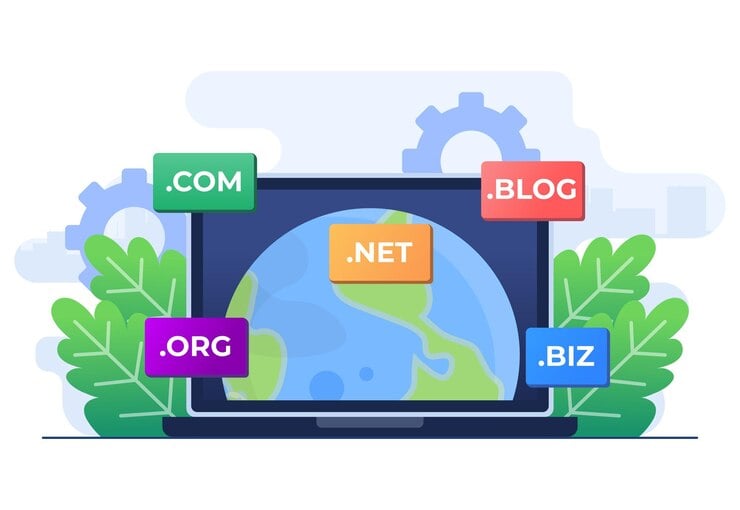
The domain universe has expanded far beyond .com, giving SMEs a toolbox of industry and geography signals.
Pros: A .cafe tells customers you run a café, while a .de reassures German buyers. These extensions can boost click-through rates and local trust when paired with relevant content.
Cons: Every extra domain adds renewal costs and fragments analytics unless redirects and canonical tags are tight.
| Also Read: The Growing Popularity of Short Domains for Mobile Users |
Tech Shifts Affecting Names: AI, Voice Search, and Web3 Considerations
Voice assistants favour short, pronounceable domains that match conversational queries. AI-generated summaries similarly reward intent-aligned names. That is why .ai, .tech, and similar TLDs have become branding shortcuts for innovation-centric firms.
Web3 domains on blockchain networks remain experimental; tooling is immature, and browser support is inconsistent. Treat them as sandboxes, useful for innovation labs, not for primary checkout flows.
When running a global domain search, test shortlisted names:
• Say them aloud to verify voice-search clarity.
• Paste them into AI chat prompts to see if the assistant recognises the brand intent.
• Check registrar policies to ensure renewal terms fit your risk tolerance.
| Also Read: Blockchain Domains Explained: Your Guide to Secure Decentralised Hosting & Web3 Presence |
Domain Security and Monitoring: Turning News Into Risk Controls
Tracking domain-market headlines is more than curiosity; it is an early-warning system against brand abuse and technical outages.
What to Monitor
- Lookalike or typo-squatting registrations tied to your brand keywords.
- New TLD launches and premium releases that could expose fresh variants of your name.
- DNS, name-server, and SSL certificate changes on your owned domains.
- Availability of brand-related keywords across emerging extensions uncovered during a global domain search.
| Also Read: Essential Domain Security Tips for Website Owners |
Selecting Tools and Integrating Monitoring Into Workflows
Prioritise cloud-first tools that automate availability checks, DNS/SSL observations, and send prioritised alerts to email or Slack. Feature-rich suites save time but may overshoot SME budgets; lean services often cover most of the needs at a fraction of the cost.
The Golden Rule: Choose the simplest setup that delivers actionable alerts rather than raw data dumps.
Incident Workflow and Governance
Assign a single “domain owner” and document an escalation path:
Detect → Verify → Block/Defend → Communicate
| Pro Tip: Set lightweight service-level targets; for example, verify suspicious registrations within 24 hours and update customers within 48 hours if phishing occurs. Tie governance reviews to major launches so marketing and security stay in sync. |
Domain Investment Trade-Offs: A Decision Framework for SMEs
Think of domain investment as two levers. The strategic lever boosts brand equity and SEO; the tactical lever manages budget, renewals, and redirects.
Premium Domains vs Multiple Defensive Registrations
Premium names shine when you need instant credibility, memorable product pages, or a short URL that converts better in ads. Multiple domains, on the other hand, are ideal for regional expansion, campaign microsites, and blocking lookalikes.
Decision prompts
• Define expected ROI, conversion lift, lead-quality improvement, or risk mitigation.
• Cap spend: e.g., no more than 10 % of quarterly marketing budget per premium purchase.
• Re-evaluate yearly; a premium you skip today may drop in price, while campaign domains can be retired after use.
Using the term domain investment deliberately aligns these prompts with bottom-line thinking.
Practical Acquisition Checklist
- Purpose: Is the domain for core branding, a campaign, or local trust?
- SEO / UX fit: Is it pronounceable, voice-search friendly, and keyword relevant?
- Technical checks: Confirm WHOIS data, renewal terms, and whether the registrar supports redirects and DNSSEC.
- Governance: Map ownership, renewal reminders, and how the domain will be redirected or canonicalised.
30/ 60/90-Day Roadmap: How to Act After a Global Domain Search
A phased plan prevents overwhelm and keeps spending in check while still delivering quick wins.
0–30 Days: Audit and Secure
• Inventory every domain you own; document registrar, renewal date, and internal owner.
• Run a global domain search for your core brand and obvious misspellings.
• Register high-risk gaps (e.g., .com typos, primary ccTLDs) immediately.
30–60 Days: Monitoring and Response
• Enable automated checks for availability, DNS and SSL changes.
• Configure alerts to the domain owner and train them on the escalation workflow.
• Begin a concise monthly report to marketing and security leads.
| Also Read: How to Optimise Cross-Device Domains for Mobile, Desktop, and Tablet Users |
60–90 Days: Strategic Buys and Tests
• Acquire targeted ccTLDs or premium names only if they meet the acquisition checklist.
• Test new domains in ads or landing pages, measuring uplift in click-through or local conversions.
• Schedule quarterly reviews to prune unused domains and optimise renewal spends.
Start Securing Your Brand Today
A global domain search uncovers available domains, detects risky lookalikes, and spots new market trends. It protects brand identity, improves discoverability, and guides smarter domain investment strategies for businesses.
Follow the 30/60/90-day roadmap to stage your domain investment decisions, always tying spend to clear marketing or protective outcomes and documented governance.
BigRock helps you find, register, and protect domains, build websites, and manage online presence easily with support and security tools. Don’t wait for your brand to be compromised or outpaced.
Run a global domain search now with BigRock!