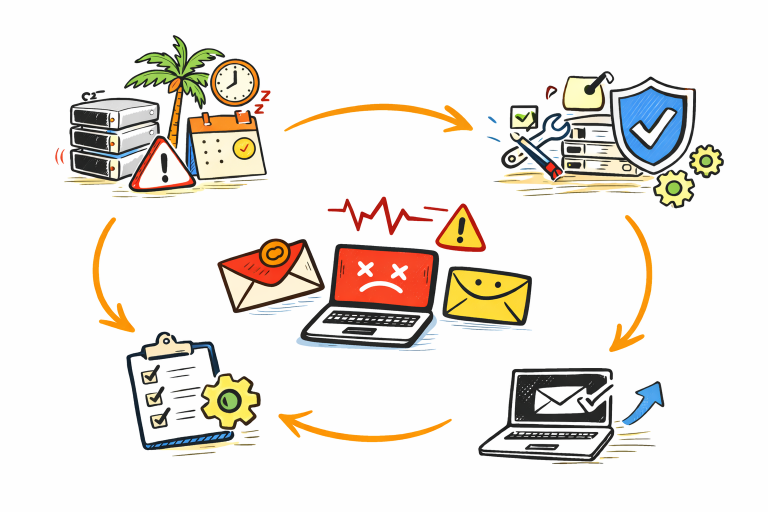
| Python web hosting provides the infrastructure, runtime, and networking layers required to execute Python web applications reliably at scale. Effective Python web hosting balances performance, cost control, and operational simplicity for business-critical systems. |
On Monday at 9 a.m., your e-commerce dashboard stalls just as the first wave of shoppers hits. Pages crawl, checkout calls time out, and nobody can tell whether the culprit is server limits or a rogue background task.
That single hour of uncertainty erodes revenue and customer trust. The simple truth: choosing the right Python web hosting removes that friction, giving you reliable deployments, predictable scaling, and fewer fires to fight. This guide shows business decision-makers how to pick, set up, and optimise hosting so their apps remain secure, fast, and effortless to operate.
Why the Right Python Web Hosting Matters for Businesses
A poor hosting decision ripples through the balance sheet: downtime loses sales, sluggish responses push users to competitors, and developers burn hours wrestling with brittle servers.
The right Python web hosting safeguards revenue, preserves customer confidence, and accelerates release cycles. It delivers predictable costs and SLAs, supports both WSGI and ASGI frameworks out of the box, and offers the operational luxuries developers crave: SSH access, managed databases, and CI/CD hooks. Wrong choices, by contrast, invite surprise bills, frantic migrations, and compliance headaches.
Map Your Workload To Hosting Types
Hosting isn’t one-size-fits-all. Match the tier to traffic patterns, workload complexity, and regulatory needs.
Shared Hosting—When to Use It
Perfect for prototypes, low-traffic sites, and quick demos, shared Python web hosting keeps budgets minimal. Expect tight limits on background workers, older Python versions, and sometimes no container or root access. Use it for proofs-of-concept only; retire it before the stakes get high.
VPS/Containers—Control With Predictability
A virtual private server or container cluster grants full-stack control, fixed CPU/RAM quotas, and a compliance-friendly isolated environment. Growth-stage apps benefit from custom dependencies and dedicated background workers.
The trade-off is operational effort: someone must patch the OS, or you pay for a managed VPS plan. Container images and orchestration (Docker, Kubernetes) streamline repeatable deployments while keeping costs transparent. This host tier remains the sweet spot for many Python web hosting needs.
Cloud/Serverless—Scale And Elasticity
Cloud platforms and serverless runtimes shine when traffic surges unpredictably. Autoscaling, managed load balancers, and pay-as-you-go pricing mean you never run idle servers.
Watch out for cost variability and cold-start latency on serverless functions. Set conservative autoscaling rules, budgets, and multi-zone redundancy to balance spending with resilience.
Framework And Runtime Considerations (WSGI vs ASGI, Versions)
Choose a host that speaks your framework’s language—or risk painful rewrites.
Framework → Hosting Mappings
Django usually ships with WSGI, though recent releases support ASGI for async features; it thrives on hosts that offer worker autoscaling and managed databases. Flask is lightweight and slots neatly into WSGI hosts or container-based setups, ideal for microservices.
FastAPI and other async frameworks demand ASGI support plus hosts that allow async worker pools or containerization. Full-stack Python tools like Reflex, Streamlit, Gradio, and Dash run happily on container-friendly platforms but may flag limits on long-running sessions—check before signing any Python web hosting contract.
Runtime, Extensions, and Python Versions
Confirm supported Python versions, C-extension availability, and whether you can pin dependencies via virtualenv or Docker images. Examine hard limits, connection caps, worker counts, and process timeouts before committing cash. These checks prevent late-stage surprises.
Deployment and Developer Experience
Great developer experience translates directly into faster, safer releases.
CI/CD, Containers, and Templates
Keep pipelines simple: build a container image, run tests, push to registry, and deploy. Most providers supply templates such as app.yaml, Dockerfile, and requirements.txt that cut setup time. Container parity between local and production eliminates “works on my machine” drama.
Access, Support, and Managed Features
Look for SSH access, managed databases, live log viewers, readable docs, and 24/7 human support. Favour hosts that let you migrate from managed dashboards to raw servers as complexity grows.
Proof-Of-Concept (POC) Recommendation
Spin up a mini-production clone that mimics real traffic, background workers, and database load for 48 hours. Validate worker saturation, DB connections, timeouts, and billing behaviour before rolling out to paying customers.
| Also Read: The Top Web Hosting Trends |
Performance Best Practices For Python Web Hosting
Performance is a joint venture between your code and the platform—profile first, tweak later.
Profile Before You Optimise
Attach a profiler to measure request latency, CPU, memory, and database timings. Fix the worst offenders—often chatty queries or oversized payloads—before adjusting servers.
Use The Right Framework For The Job
Async frameworks excel at I/O-bound APIs; synchronous stacks are simpler for traditional page renders. Know the trade-off: async adds complexity but can double throughput in chatty workflows.
Caching, CDNs, and Static Asset Offload
Introduce reverse proxies like nginx or Varnish, in-memory caches (Redis, Memcached), and a CDN for static files. These layers slash backend requests, shrink latency, and save money.
Database Optimisation and Connection Management
Index hot queries, employ connection pooling, and batch background jobs. Decide early between managed or self-managed databases; the latter grants control but demands vigilance.
Monitoring, Alerts, and Autoscaling Strategy
Track latency, error rates, and resource saturation. Configure autoscaling triggers well below panic levels and plan graceful degradation, feature toggles, or read-only modes when limits loom.
| Pro Tip: Run a short replay of yesterday’s production traffic during off-peak hours, including background jobs and database writes. This reveals connection limits and worker exhaustion far quicker than synthetic load tests. |
Security, Compliance, and Resilience
Encrypt everything with SSL/TLS, rotate secrets securely, and enforce role-based access. Automated daily backups and multi-zone deployments avert single points of failure.
Understand the shared security model: your provider secures the infrastructure; you secure the code and data. Verify data locality, encryption at rest, and backup retention policies with every prospective host.
Decision Checklist: How to Choose a Host for Your Python App
Here’s a practical checklist to cut through marketing noise and evaluate Python web hosting options with confidence:
- Define traffic profile and target SLA.
- Confirm framework/runtime support: WSGI or ASGI, required Python version.
- Validate deployment options: SSH, containers, and CI/CD templates.
- Test performance with a POC—check worker counts, DB connections, and background task behaviour.
- Review support levels, automated backups, multi-zone redundancy, and a clear migration path.
- Evaluate billing models for cost predictability.
- Prioritise the three criteria that matter most to your business before comparing plans. The clarity will guide you to Python web hosting that meets today’s needs and tomorrow’s ambitions.
Choose, Test, and Scale with Confidence
Reliable hosting starts with clear requirements. Map your traffic and compliance needs, run a proof of concept under real load, profile hotspots, cache aggressively, and choose a provider that supports your framework and deployment workflow.
For businesses that value predictable support and straightforward scaling, BigRock’s hosting options deserve a spot on your shortlist.
Get started now!