December is when your attention is pulled in every direction. Accounts need to be closed, teams are wrapping up work, vendors are chasing payments, and plans for next year are starting to take shape.
In the middle of all this, one small thing often slips through the cracks: your domain renewal deadline.
You assume it is taken care of, until one morning your website stops loading!
If you have ever searched for domain expiry date details after your site has gone down, you’re not alone.
Entrepreneurs often lose access to their domains without warning. So, set up that domain renewal reminder right away.
In this guide, we’ll understand why domain renewals are commonly missed at year-end and what you can do to make sure it does not happen to you.
What Are Expired Domains?
Expired domains are domain names that were previously registered but were not renewed once their registration period ended.
After expiration, a domain typically moves through a defined lifecycle. This includes a grace period during which the original owner can still renew it, followed by a redemption phase with additional recovery steps and costs.
If the domain is not renewed during these stages, it is eventually released back into the public pool and becomes available for new registration.
5 Reasons Why Domain Renewals Are Commonly Missed at Year-End
For business owners, year-end is not about one or two deadlines.
You’re handling finances, client commitments, compliance filings, team closures, planning next year’s goals, the list goes on.
In all the chaos, checking a domain renewal deadline can drift into the background. Here’s why this happens (more often than you think):
Reason #1: Most of Your Time Is Spent on Daily Work (Instead of Planning Ahead)
Workers globally are interrupted so frequently that nearly half say their workdays feel chaotic and fragmented due to constant notifications and meetings:
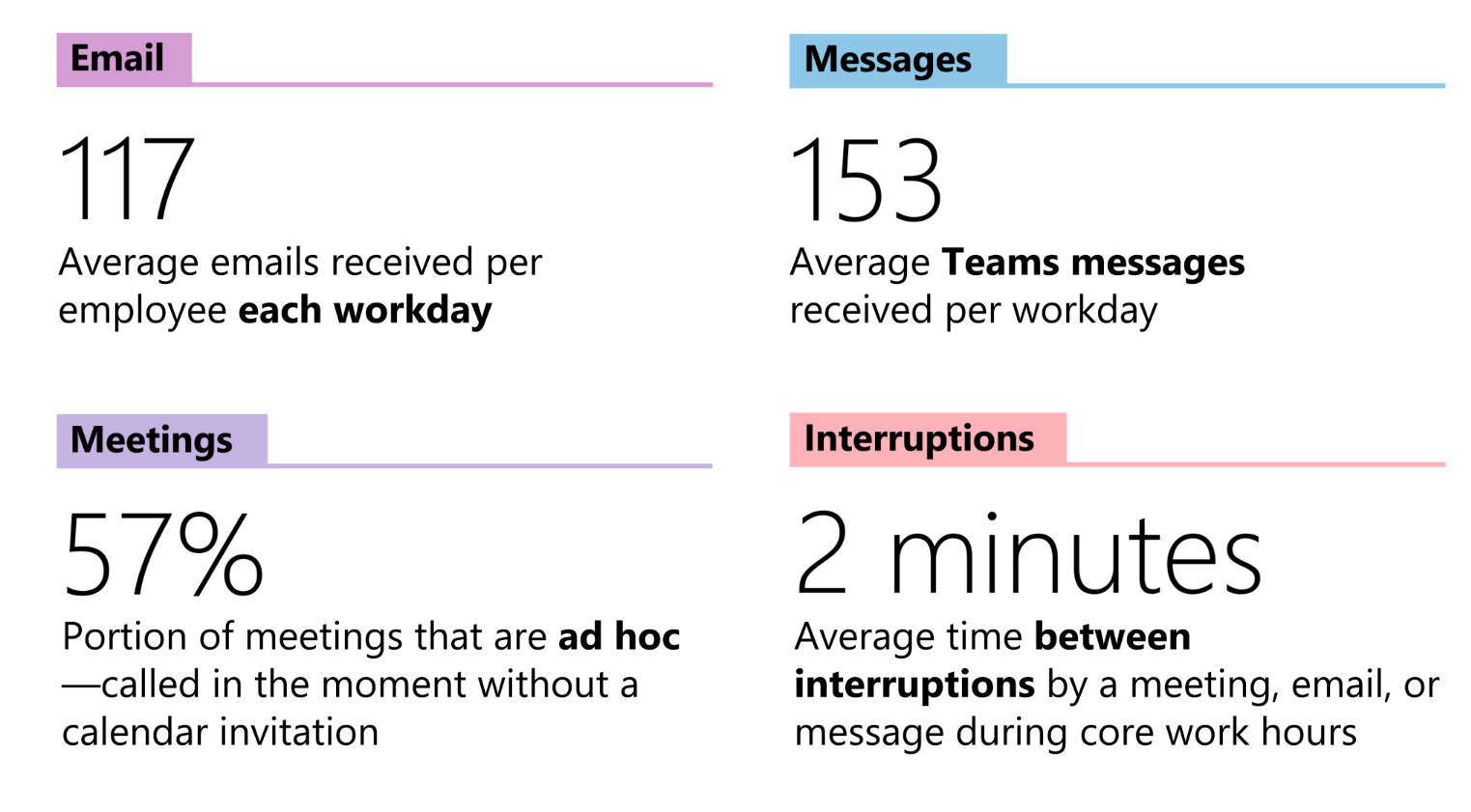
In fact, employees using digital productivity suites report being interrupted every two minutes by notifications, meetings, and emails, stretching the workday into evenings and even weekends. This fragmentation makes routine tasks harder to prioritise.
When your work calendar is filled with urgent deliverables and meetings, something like setting reminders for domain renewals is easy to overlook.
Reason #2: Your Domain Might Still Be Owned by Someone Else
Often domains were purchased years ago by an employee, agency, freelancer, or vendor during a website build.
Over time, said contact might move on, and renewal notices still go to their inbox. Because domain ownership hasn’t been transferred to your current business email, the reminder chain breaks.
This issue rarely triggers a visible alert in the business until a deadline passes and the website fails to load.
Reason #3: Emails about Renewals Get Lost in Overloaded Inboxes
Email overload is a real workplace trend. The average professional receives 121 emails a day, and many employees have 50+ unread messages at any time. About 23% of work time can be eaten up just checking messages:
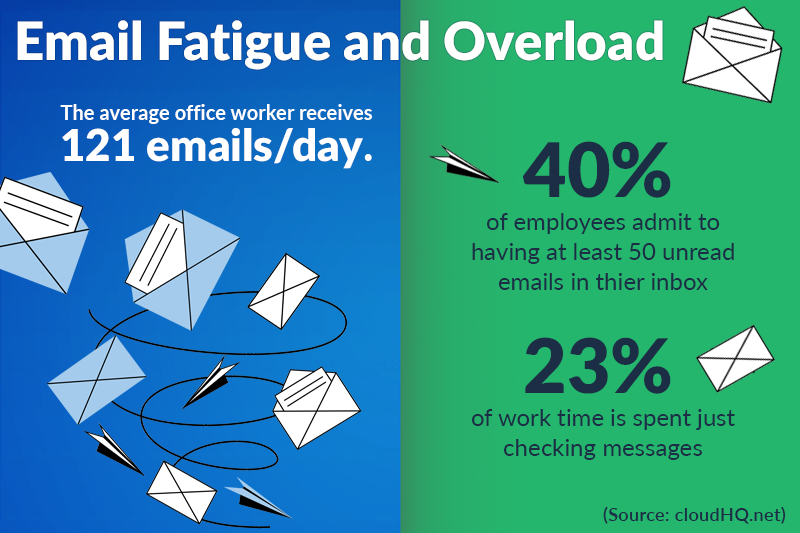
With this intensity of daily noise, domain renewal notices often sit unread, go into spam, or get buried beneath operational emails. Missing one or two reminders is not uncommon in this environment where email productivity is a known challenge.
Also Read: 10 Tips to Stop Your Emails from Being Marked as Spam
Reason #4: Domains Bought Years Ago Have Been Forgotten
Most small and medium businesses register their domains early on and rarely revisit them unless there’s a problem. Over the years, you upgrade tools, change hosting, add services, and shift priorities. But the domain registration rarely features in periodic reviews.
Without a routine audit or centralised tracker, domains purchased as long as five or ten years ago can creep up on their expiry date, unnoticed until something goes wrong.
Reason #5: Auto-Renew Isn’t Always Turned On, or It Fails Without Notice
Many businesses think auto-renew protects them, but without monitoring the settings, expiration warnings and payment failures still happen. If the credit card on file expires or auto-renew is disabled due to billing issues, no one may notice until it’s too late.
Because most owners don’t actively check renewal settings after initial setup, auto-renew becomes a false sense of security.
Missing a domain renewal has emerged as a natural outcome of how busy, overloaded, and fragmented modern work has become. Between constant interruptions, overflowing inboxes, and the sheer number of urgent year-end tasks, checking something that happened years ago rarely feels urgent until the consequences hit.
The Business Impact of a Missed Domain Renewal
When a domain renewal is missed, the consequences show up fast and in places most businesses depend on every day. What makes this risky is that the damage often starts before you even realise what has gone wrong.
Here are the key areas of impact backed by industry data:
Your Website Becomes Unavailable = Lost Revenue
When a domain expires, your website stops loading. Customers cannot see your products, services, or contact information. This directly affects sales opportunities and customer acquisition.Industry research shows that website downtime has a high financial cost.
In 2025, an uptime analysis estimated that even a few minutes of unplanned downtime can cost organisations thousands of dollars per minute, and the average cost of downtime is in the tens of thousands per minute for larger enterprises.
Some studies show that downtime costs can exceed $14,000 per minute, underscoring the criticality of uptime to business continuity.
Business Email and Communication Stops Working
Your domain supports not only the website but also your professional email infrastructure. When your domain expires, email services tied to that domain can fail, disrupting order confirmations, customer support, vendor contact, and internal coordination.
Email remains one of the most relied-upon channels for business communication, especially for small and mid-sized companies where direct contact and rapid response matter in sales and service.
Customers May Lose Trust in Your Reliability
Unreachable websites and non-functional emails send a signal customers notice. Today’s consumers expect reliability, and digital outages erode confidence.
Downtime impacts customer satisfaction and loyalty. Research shows that customer satisfaction and loyalty depend largely on how usable, trustworthy, and well-designed a website feels.
Search Visibility (SEO) Suffers With Downtime
Search engines factor reliability into ranking signals. When your website isn’t reachable, search crawlers cannot access your pages. This can negatively affect rankings and organic traffic over time.
Downtime has been linked to lower crawl rates and diminished SEO performance. Frequent or prolonged downtime can reduce visibility, meaning it takes even longer to recover search traffic once your site returns.
Indirect Impacts Can Last Long After the Domain Is Back Online
Beyond immediate financial effects, downtime can have lingering consequences:
- Customers who experience an outage may not return.
- Search engines may take time to restore SEO standing.
- Teams lose productivity while troubleshooting and restoring services.
These longer-term impacts compound the initial problem and can affect growth targets or annual planning.
Also Read: How to Renew a Domain Name: A Simple Guide
Understanding the Domain Expiry Timeline
When a domain renewal is missed, there is still a limited window to act. However, that window is not open-ended, and the rules are not always obvious.
Domains follow a fixed expiry lifecycle, and at each stage, your ability to recover the domain changes.
The table below breaks down what happens after a domain expires, how much time you actually have at each stage, and when recovery stops being possible:
| Stage | What This Means | Typical Duration | Website & Email Status | Can You Recover the Domain? | Cost & Risk Level |
| Active (Before Expiry) | Your domain is registered and fully under your control. | Until renewal deadline | Website and email work normally | Yes | Normal renewal cost, no risk |
| Expiry Date Reached | The renewal deadline has passed. The domain officially expires. | Day 0 | Website or email may stop working immediately, depending on registrar | Yes | Standard renewal cost, low risk |
| Grace Period | Registrar allows late renewal without releasing ownership. | 0 to 45 days (varies by registrar and TLD) | Website and email usually remain down | Yes | Standard renewal cost, low to medium risk |
| Redemption Phase | Domain is removed from normal systems and marked for deletion. | ~30 days | Website and email remain unavailable | Yes, but through special recovery | High recovery fee, high risk |
| Pending Delete | Domain is scheduled for permanent deletion. No recovery options remain. | ~5 days | Website and email unavailable | No | No recovery possible, critical risk |
| Public Release | Domain is released and available for anyone to register. | Immediate after pending delete | New owner controls the domain | Only by negotiating with new owner | Often expensive or impossible |
Key Takeaways
- The grace period is your safest window. Once you miss it, recovery becomes expensive and uncertain.
- Email and website disruption can start immediately, even before ownership is lost.
- Redemption is not guaranteed and often involves high fees and delays.
- Pending delete means the domain is effectively gone, even if it still looks “expired” in dashboards.
- Public release puts your brand at risk, especially if the domain name has traffic or business value.
Most business owners assume there will be clear warnings or that renewal can be done anytime. In reality, the domain lifecycle is rigid, automated, and unforgiving. Once the process moves forward, control shifts quickly and silently. Understanding this timeline is the difference between a routine renewal and a costly recovery.
How to Prevent Domain Name Expiration?
Most domain renewal failures are not caused by neglect.
They happen because responsibility is unclear and no one is actively watching something that appears stable.
Domains tend to stay out of sight for years, which makes them easy to forget until the damage is already done.
Avoiding expiration starts with treating your domain as a core business asset and managing it with intent.
Tip #1: Establish Clear Ownership Inside the Business
Target audience: Founders whose domain setup dates back to early vendors, agencies, or former employees
Many businesses still rely on access created during their early days.
The person who registered the domain may no longer be involved. The email address receiving renewal notices may no longer be monitored. When ownership is unclear, accountability disappears.
What to focus on
- Ensure the domain is registered under a business-controlled account.
- Use a shared company email address for all registrar communications.
- Assign one internal owner responsible for domain access and renewals.
Questions to ask
- Who can log into our domain registrar today?
- Does that person still work with us?
- Which email address receives renewal notifications?
- Who is responsible if a renewal is missed?
Tip #2: Review Renewal Dates on a Fixed Schedule
Target audience: Operators managing multiple deadlines and recurring reviews
Waiting for reminder emails is risky. Inboxes are crowded and alerts often arrive weeks before action feels necessary. Domains should be reviewed on a schedule that already exists in your business.
What to focus on
- Check domain expiry dates during financial reviews or annual planning.
- Confirm renewal dates directly inside the registrar account.
- Track renewal timelines alongside other compliance or operational reviews.
Questions to ask
- When did we last check our domain expiry dates?
- Is this review tied to a recurring business process?
- Do we rely on emails to surface renewal risk?
- Would a missed reminder still be caught early?
Tip #3: Reduce Renewal Frequency for Critical Domains
Target audience: Businesses focused on stability and long-term continuity
Annual renewals increase the number of times something can go wrong. Payment issues, role changes, and competing priorities make it easy to miss a deadline. Extending registration periods reduces this exposure.
What to focus on
- Renew key domains for multiple years once access is verified.
- Separate essential domains from temporary or campaign domains.
- Align renewal periods with long-term business plans.
Questions to ask
- Which domains support daily operations?
- How often do we want to manage renewals?
- Do annual renewals still make sense for our size?
- Have we extended registrations for core domains?
Tip #4: Maintain Active Payment and Contact Information
Target audience: Founders who assume auto-renewal prevents failure
Auto-renewal only works when payment and contact details stay current. Cards expire. Billing contacts change. These issues often go unnoticed until a renewal fails.
What to focus on
- Use a business-owned payment method for renewals.
- Review billing details during year-end financial checks.
- Confirm registrar contact information is accurate and accessible.
Questions to ask
- Which payment method funds our renewals?
- When was it last reviewed?
- Who receives billing failure alerts?
- Would we notice a failed renewal attempt?
Tip #5: Build Domain Oversight Into Day-to-Day Operations
Target audience: SMEs preparing for growth and operational consistency
Domains should be managed with the same discipline as banking access or payroll systems. They support revenue, communication, and customer trust. Oversight should not depend on memory or urgency.
What to focus on
- Include domain access in onboarding and offboarding processes.
- Document registrar access and recovery steps.
- Review domain status at least once a year.
Questions to ask
- Is domain access documented internally?
- Would a staff change affect renewal control?
- Do we review domains intentionally or incidentally?
- Are we prepared for a renewal issue at any time?
Tip #6: Centralise Domain Records Before They Get Lost
Target audience: Founders managing multiple brands, products, or legacy domains
As businesses grow, domains accumulate. Old product names, campaign URLs, regional variants, and defensive purchases often sit across different registrars and accounts. Over time, no single view exists.
Lack of visibility leads to missed renewals because no one knows what all needs to be renewed in the first place.
What to focus on
- Maintain a single internal record of all domains the business owns.
- Include registrar name, expiry date, admin contact, and renewal status.
- Review this record during annual planning or audits.
- Treat domain inventory as a business asset register.
Questions to ask
- Do we know every domain registered under our brand?
- Are any domains spread across multiple registrars?
- Is there a single source of truth for expiry dates?
- Who updates this record when a new domain is added?
Tip #7: Design Renewal Responsibility to Survive Team Changes
Target audience: Businesses with frequent role changes or outsourced support
Domain renewals often depend on individuals rather than roles. When that person leaves or changes responsibilities, the renewal task disappears with them.
Sustainable processes survive handovers.
What to focus on
- Tie domain responsibility to a role, not a person.
- Ensure access and documentation remain with the business.
- Include domain access review during exits and handovers.
- Avoid storing registrar credentials in personal password managers.
Questions to ask
- Is domain responsibility tied to a specific role?
- Would a resignation affect access or oversight?
- Are credentials stored securely and centrally?
- Has domain access ever been reviewed during an exit?
Tip #8: Separate Core Business Domains From Experiments
Target audience: Founders who register domains frequently for new ideas
Not every domain deserves the same level of attention. Core domains that support revenue and communication need stricter controls than temporary or experimental ones.
Confusing the two increases renewal risk.
What to focus on
- Identify which domains are essential to daily operations.
- Apply stricter renewal policies to those domains.
- Use shorter registrations for experiments and campaigns.
- Review non-core domains regularly and drop what no longer matters.
Questions to ask
- Which domains would hurt the business if they expired?
- Are all domains treated with the same priority?
- Do we review experimental domains regularly?
- Are renewal rules clear across domain types?
Turn the Renewal Deadline into a Non-Issue with BigRock
Domain renewals fail when they rely on memory, reminders, or good intentions. Year-end pressure makes that clear.
When attention is stretched and priorities collide, only systems you trust keep working.
The goal is not to think about renewals more often. The goal is to put them in a place where they stop demanding attention altogether. That means clear ownership, longer renewal windows for critical domains, and a single view of what matters.
BigRock helps you do exactly that. We give you visibility into your domains, control over renewal settings, and the ability to manage everything from one account instead of scattered logins and inboxes.
So why wait? Get started now!
FAQs
What happens if you miss your domain renewal deadline by a few days?
Missing the renewal deadline does not usually mean instant loss. That said, your domain may stop working right away, and you enter a grace period where renewal is still possible.
After that, recovery becomes expensive and uncertain. Customers lose access to your site, and emails may stop working. Acting early is always cheaper and simpler than recovery.
Why do businesses lose domains even when auto-renewal is enabled?
Auto-renewals fail more often than people expect. Payment cards expire, billing details change, and renewal settings get altered during account updates.
Many business owners assume auto-renewal means zero follow-up, which creates blind spots. You still need periodic checks to confirm billing and renewal status. Registrars like BigRock help reduce this risk by combining auto-renew with visible renewal status and reminders tied to your account activity.
How long do you really have to recover an expired domain?
Recovery time depends on the domain stage. During the grace period, renewal is usually possible at standard cost. Once the domain enters redemption, recovery involves higher fees and delays.
After the pending delete stage, recovery is no longer an option. At that point, anyone can register the domain. This entire cycle can move faster than most business owners expect, which is why relying on last-minute action often fails.
How can you manage multiple domains without missing renewals?
Start by maintaining a single list of all domains your business owns, along with expiry dates and registrar details. Assign clear responsibility for reviewing this list at least once a year.
Centralised management helps even more. Using a single registrar account, such as BigRock, lets you track renewals, ownership, and billing in one place, instead of juggling multiple logins and inboxes.
When is the best time of year to review domain renewals?
Year-end is ideal because you are already reviewing finances, vendors, and plans for the next year. Adding domain checks to that process prevents last-minute surprises. Many businesses use this window to extend renewals, update billing details, and clean up ownership. Doing this through a single platform like BigRock keeps the process focused.