As India gears up to celebrate Independence Day on August 15th, it’s an opportune moment for business owners, web developers, and digital agencies to reflect on their own journeys towards operational freedom.
In the digital realm, independence isn’t just about breaking away from traditional constraints—it’s also about the foundational decisions that free your business to scale and succeed.
Central to this digital autonomy is choosing the right web hosting provider.
Reliable web hosting is a strategic asset for any business, whether you’re launching a startup or steering a flourishing enterprise.
With the web hosting market projected to reach a revenue of US$159.90 billion in 2024 and expected to grow at an annual rate of 17.35% to US$355.80 billion by 2029, selecting a reliable web hosting provider has never been more critical.
This guide delves into the critical role of web hosting in ensuring your business remains robust and responsive. Let’s get started.
What Is Web Hosting?
Web hosting is a service that allows individuals, businesses, and organizations to make their websites accessible on the Internet. Essentially, a web hosting provider allocates space on a server for clients to store their website files and data.
This server is connected to the internet, ensuring that when users type the website’s URL into their browser, they are directed to the correct server and can view the site online.
How Does Web Hosting Work: A Step-by-Step Guide
Web hosting for businesses is a crucial component of establishing an online presence and ensuring that a company’s website is accessible to its customers and clients. It involves a series of steps to make websites accessible worldwide. Here’s a simplified process:
- Domain Name Registration: Before anything else, you need a domain name (like www.example.com). This is your website’s address on the internet. You register this domain through a domain registrar.
- Choosing a Web Hosting Provider: Next, you select a web hosting service provider. These are companies that have servers—either physical or virtual—where your website’s files and data will live.
- Account Setup and Hosting Plan: After choosing a provider, you set up an account and select a hosting plan. Plans vary in terms of storage, bandwidth, server speed, security features, and additional services.
- Storing Website Files: You upload your website’s files to your hosting account. These files typically include HTML, CSS, JavaScript files, images, and videos. This can be done through a File Transfer Protocol (FTP) or directly through the hosting provider’s control panel.
- Server Allocation: The hosting provider allocates a space for your files on one of their servers. In shared hosting, your site is stored alongside others on the same server; with dedicated hosting, you get a server all to yourself.
- DNS Configuration: Domain Name System (DNS) settings are configured to point your domain name to the server’s IP address where your files are stored. This tells the internet where to find your site.
- Website Goes Live: Once DNS propagation is complete, which can take anywhere from a few hours to 48 hours, your website becomes accessible to anyone in the world with an internet connection.
- Ongoing Maintenance and Support: Most hosting providers offer support and maintenance services to ensure your site remains accessible and secure. This includes software updates, security patches, and, sometimes, tools for website optimization.
Types of Web Hosting

Web hosting can be categorized into several types, each suited to different needs based on factors like website traffic, server control, budget, and technical requirements. Here are the primary types of web hosting:
1. Shared Hosting
In shared hosting, multiple websites are hosted on a single physical server, sharing resources such as CPU, RAM, and disk space.
Best for: Small businesses, blogs, and personal websites that have moderate traffic and require a cost-effective hosting solution.
2. VPS (Virtual Private Server) Hosting
VPS hosting divides a server into virtual servers, where each website is hosted on its own dedicated segment of the server, though it still shares the physical server with other users.
Best for: Websites that require more control and resources than shared hosting can provide but do not need a dedicated server. It’s ideal for medium-sized businesses, e-commerce sites, and larger blogs.
3. Dedicated Server Hosting
With dedicated hosting, a client rents an entire server that is not shared with anyone else. This provides complete control over the server, including the choice of operating system, hardware, etc.
Best for: Large businesses and high-traffic websites that require high performance, security, and full control over their hosting environment.
4. Cloud Hosting
Cloud hosting offers unlimited ability to handle high traffic or traffic spikes. A website is hosted on a cluster of servers, allowing it to pull resources from multiple different places, which makes it very scalable.
Best for: Websites with variable traffic, such as those with seasonal traffic spikes or marketing campaigns that might increase server load unpredictably.
5. Managed Hosting
Managed hosting generally implies that the hosting company takes care of all the server-related issues. This can be applied to any type of hosting and often includes security, monitoring, technical support, and more.
Best for: Businesses that do not have an IT team but need robust hosting with maintenance support.
6. Colocation
In this type, instead of renting server space, you rent space within a data center. You bring your own server hardware, and they provide power, cooling, physical security, and an internet uplink.
Best for: Companies that want the benefits of a large IT department without the costs of running one in-house.
7. WordPress Hosting
This is a type of shared hosting that is optimized for WordPress sites. It includes features like one-click installations, automatic software updates, and specific security measures.
Best for: Users looking for a hosting solution that’s optimized for WordPress, including bloggers, web designers, and small businesses using the WordPress platform.
8. Reseller Hosting
Reseller hosting involves purchasing hosting services in bulk and then selling them to customers, typically to host websites. It often includes additional tools to manage accounts.
Best for: Web developers or designers who want to offer hosting services as an additional part of their business.
Shared vs VPS vs Dedicated Servers
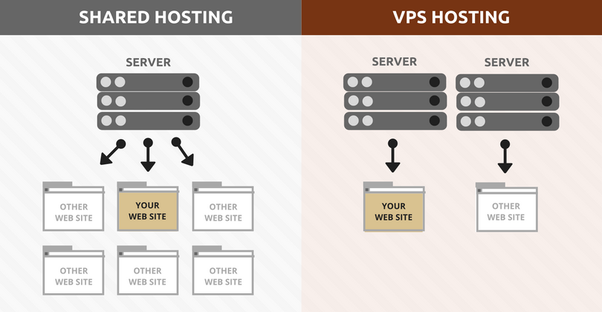
When it comes to web hosting, the three most popular options are shared, VPS (Virtual Private Server), and dedicated hosting. Each type has distinct features and benefits, making it better suited for specific kinds of websites and business needs.
Here’s a detailed comparison of these hosting types:
Aspect |
Shared Hosting |
VPS Hosting |
Dedicated Hosting |
| Cost | Most affordable option. | More expensive than shared, less than dedicated. | Most expensive due to exclusive server use. |
| Resource Allocation | Limited resources; shared among many websites. | Dedicated portion of server resources. | Full control over server resources. |
| Performance | Suitable for low traffic; may slow under load. | Better performance and stability than shared. | Best performance; ideal for high-traffic sites. |
| Security | Basic security; potential risk from other sites. | Enhanced security options; more isolation. | Highest security; full control over security setups. |
| Scalability | Limited scalability options. | Easily scalable; more flexibility to configure. | Highly scalable; complete freedom in configuration. |
| Control | Less control; server management is shared. | More control with root access. | Full control with administrative and root access. |
| Suitability | Ideal for small websites and beginners. | Good for medium-sized businesses and growing sites. | Best for large businesses with high demands. |
| Maintenance | Fully managed by hosting provider. | Semi-managed; requires some technical knowledge. | Often unmanaged; requires significant expertise. |
Challenges of Current Web Hosting Services
Web hosting, while critical for maintaining an online presence, comes with its own set of challenges. Here are five primary challenges faced by web hosting services, along with detailed explanations:
1. Slow Website Loading and Navigation Speed
Slow-loading websites deter users, with studies showing that 53% of users abandon a site that takes more than three seconds to load.
Web hosting plays a crucial role in website loading speeds. The type of hosting, server location, and quality of hardware directly affect how quickly a website loads. Shared hosting might slow down a site during high traffic times due to limited resources. Dedicated and VPS hosting offer more resources, thus improving speed.
Additionally, hosts providing Content Delivery Networks (CDNs) and using modern, fast servers enhance loading times further. Faster websites provide a better user experience and are favored by search engines, which can significantly improve a site’s visibility and ranking in search results.
2. Maintaining High Uptime
According to a study by Dun & Bradstreet, nearly 60 percent of Fortune 500 companies endure at least 1.6 hours of downtime weekly.
Uptime is a critical metric in web hosting that refers to the amount of time a server and, consequently, the websites hosted on that server, are up and running without interruption.
It’s expressed as a percentage of total possible operational time. The industry standard of 99.9% uptime, often referred to as the “three nines,” is crucial.
3. Scalability Challenges
As businesses expand, they require web hosting that can grow with them. However, many find their hosting service lacks scalability due to outdated infrastructure or insufficient resource allocation.
This limitation can result in slow website performance during high-traffic periods and potential lost revenue. Effective scalability in hosting ensures that a website can handle increased loads seamlessly without impacting user experience or operational efficiency.
4. Security Concerns
Every day, more than 30,000 websites are hacked, and small to medium-sized businesses are the target of 43% of cybercrimes globally.
Web hosting is vulnerable to cyber-attacks, posing serious risks of data breaches. Such security lapses can erode customer trust and attract heavy regulatory fines.
It’s essential for hosting services to implement robust security measures, including firewalls, encryption, and regular security audits, to protect sensitive data and maintain service integrity.
Why Is Reliable Web Hosting A Breakthrough For Businesses?
Reliable web hosting is a cornerstone for any business with an online presence. Without it, the very foundation of a business’s communication, marketing, and sales platforms can be compromised. Here’s why it’s so crucial:
1. Customer Experience and Accessibility
Your website often serves as the first point of contact between your business and potential customers. If your hosting isn’t reliable, your website might be inaccessible when customers try to visit. This leads to a poor user experience and could turn potential sales into missed opportunities, as visitors may not return after a negative experience.
2. Brand Reputation and Trust
Frequent downtime or a slow website not only frustrates users but can also tarnish your brand’s reputation. Customers expect professionalism and reliability, and a website that is often down or underperforming reflects poorly on your business. This can erode trust, which is essential for building long-term customer relationships.
3. Operational Continuity
Many businesses rely on their websites for operational functions such as customer support, lead generation, product sales, and more. Unreliable web hosting can disrupt these essential activities, leading to operational delays, loss of data, and even compliance issues, particularly for businesses that require continuous online availability to meet industry standards.
4. SEO and Online Visibility
Search engines prioritize the user experience in their ranking algorithms. Websites that are frequently unavailable or slow to load are likely to be ranked lower in search results. This reduced visibility can significantly impact your business’s ability to attract new customers through organic search traffic.
5. Security and Data Protection
Reliable web hosting also ensures better security protocols to protect sensitive data. Inadequate hosting can make your website vulnerable to security breaches, leading to data theft, loss of customer information, and potential legal repercussions.
How to Choose the Right Web Hosting: A Four-Step Guide
Selecting the best web hosting service is more than just browsing through options and picking the most popular one. It’s about aligning a service with the specific needs of your website and its future growth. Here’s a straightforward guide to navigating this crucial decision.
Step 1: Assess Your Needs
Start by understanding what your website requires to perform optimally. Reflect on the following:
- Traffic Expectations: Consider the amount of traffic you expect. High traffic sites will need more robust hosting solutions to handle the load.
- Website Size and Content: Evaluate the size of your site and the type of content you’ll host. More pages and heavy content like videos demand more storage and bandwidth.
- Technical Needs: Identify any specific software and platform needs. For instance, a site built on WordPress might perform best on WordPress-optimized hosting.
- Key Features: Look into specific hosting features that could enhance your website’s functionality. These might include one-click installs, easy-to-use control panels, and the ability to handle specific data protocols that your website might require. Prioritize features that will help manage and scale your site more efficiently, such as automated backups, advanced caching options, and integrated performance monitoring tools.
Step 2: Research Potential Providers
Investigate potential web hosting providers by considering industry leaders and their market shares. Understand their specific offerings and how they align with your needs:
- Market Leaders: Look into major providers like AWS, Google Cloud, and GoDaddy, noting their specialties and strengths.
- Service Diversity: Evaluate if they offer specialized services like domain registration or integrated website-building tools.
- Platform Compatibility: Check if the provider supports the CMS you are using, like WordPress, which powers a significant portion of the web.
Step 3: Consider Your Budget
On an average, you can expect to pay between $4.63–$6.52 per month for mid-tiered shared web hosting.
Budgeting correctly for web hosting involves more than just looking at the sticker price.:
- Total Cost of Ownership: Factor in all costs, including potential upcharges after introductory offers and fees for additional services like domain transfers and SSL certificates.
- Value for Money: Assess what you receive for your payment in terms of reliability, support, and additional features.
Step 4: Evaluate Provider Reputation and Support
Finally, a provider’s reputation and the quality of support are paramount:
- Check Reviews: Look at customer reviews and testimonials to gauge the provider’s service quality and reliability.
- Test Support: Before committing, test the responsiveness of the provider’s customer support through various channels like live chat or phone.
BigRock: Your Reliable Web Hosting Partner
Looking to free your business from the limitations of poor web hosting? Meet BigRock, your go-to for rock-solid web hosting services that boost your site’s performance and keep it smooth no matter the traffic spike. Whether you’re a small business or a bustling digital agency, BigRock understands your needs and delivers beyond expectations.
What Makes BigRock Reliable?
- Crash-free Performance: With BigRock, you get hosting that promises an impressive 99.99% uptime. This means your site stays up and running, keeping your business available to customers all the time. You won’t miss out on traffic or sales because of downtime.
- Speed that Speaks: Slow sites are a drag, right? BigRock’s servers are optimized for speed, ensuring that your website loads fast and navigates smoothly. Say goodbye to losing visitors due to sluggish response times.
- Rock-Solid Security: Concerned about cyber threats? BigRock’s got you covered with top-tier security measures. From regular backups to advanced firewalls and SSL certificates, your site’s security is in trustworthy hands.
- Scale as You Grow: As your business expands, so do your website’s needs. BigRock’s hosting solutions are designed to scale with you, offering seamless upgrades without any hitches. This means more space, more power, and more capabilities as your online presence grows.
Key Features That Make BigRock Stand Out
BigRock is one of the best website hosting for small businesses. It offers a comprehensive range of features tailored to meet the diverse needs of its customers, ensuring a robust and reliable web presence.
Here are the key features that make BigRock stand out as a web hosting provider:
1. Variety of Hosting Options
BigRock provides multiple hosting services, including shared hosting, VPS hosting, dedicated servers, and cloud hosting. This variety allows you to choose the right hosting type based on your specific requirements, whether it’s for a personal blog, a thriving e-commerce store, or a large corporate website.
2. Domain Services
With BigRock, you get extensive domain services such as domain registration, domain transfer, and premium domains. They also offer a free extension for one year when you transfer your domain, making it a cost-effective option.
3. High Uptime Guarantee
BigRock promises an impressive 99.99% uptime, ensuring that your website remains accessible to users with minimal downtime. This high reliability is crucial for maintaining customer trust and satisfaction.
4. Advanced Security Measures
BigRock prioritizes security. They offer tools like SiteLock to protect against bots and malware, CodeGuard for regular backups, and Digicerts and SSL certificates to secure online transactions and boost your site’s credibility.
5. Email Solutions
Professional email services are available with BigRock, featuring anti-virus protection and spam filters to maintain clean and secure communications. Their email solutions are designed to enhance your professional image and operational efficiency.
6. User-Friendly Control Panels
Depending on the hosting type, BigRock provides cPanel for Linux hosting and Plesk for Windows hosting. These control panels make it easy to manage your website’s files, databases, and email accounts.
7. One-Click Installations
BigRock supports one-click installation of various applications, including WordPress, Joomla, Drupal, and e-commerce platforms like Magento. This feature simplifies the process of setting up and managing your website.
8. Dedicated Customer Support
Customer support is available 24/7 via live chat, email, and phone. Whether you need help with setup, troubleshooting, or any other issue, BigRock’s responsive support team is ready to assist you.
9. SEO and Marketing Tools
To help you improve your website’s visibility and ranking, BigRock offers managed SEO services. These services include keyword research, SEO optimization, and more to ensure your site ranks well across major search engines.
As We Conclude
It is clear that reliable web hosting is not just about keeping a website up and running. It’s also about:
- Ensuring a consistent, secure, and positive interaction with your customers
- Safeguarding your business’s reputation
- Enabling smooth operational functions that foster business growth and customer satisfaction
Without reliable hosting, businesses risk immediate disruptions and long-term consequences that could stifle success in a competitive online marketplace.
This is where BigRock comes into the picture. With their robust hosting solutions, BigRock ensures your website remains accessible, secure, and fast. Their 24/7 customer support and advanced security measures give you peace of mind that your online presence is in good hands.
So why wait?
Make the smart choice for your business and experience hassle-free hosting with BigRock today!