| Jamstack hosting refers to platforms designed to serve pre-rendered static assets via a global CDN while supporting dynamic features through serverless functions and APIs. In 2025, selecting the right provider means striking a balance between edge performance, modern build pipelines, and predictable cost models. This guide highlights the differences between top platforms in terms of CDN reach, incremental deploys, serverless runtimes, security, and procurement friction. |
Choosing a Jamstack hosting provider in 2025 means striking a balance between raw performance and modern build pipelines, flexible serverless functions, and predictable costs.
This guide strips away marketing noise and highlights the essentials for developers, agencies, and CTOs. You’ll see how leading platforms differ in terms of CDN edge speed, build pipelines, incremental deploys, serverless runtimes, security posture, and procurement friction.
Quick Buyer’s Checklist: What Matters for Jamstack Hosting
Before trialling a provider, rank these factors against your project goals:
- Performance & Global CDN Edge: Confirm how many points-of-presence (POPs) exist, what cache rules you can tweak, and typical time-to-first-byte (TTFB). Geography matters if you serve truly global traffic.
- Build Pipelines & CI: Look for incremental builds, build-minute limits, concurrency caps, and cache reuse. Large content sites require intelligent caching to prevent slow, full rebuilds.
- Serverless Functions & Backend Integrations: Review supported languages, cold-start behaviour, concurrency limits, and regional execution. Edge functions close to users cut latency for personalisation and API stitching.
- Deployment Workflow & Developer Experience (DX): Git integrations, preview URLs on every branch, instant rollbacks, and local emulation keep engineers productive and non-technical stakeholders informed.
- Security, TLS, and DNS Management: Automatic TLS, seamless staging-to-production certificates, and straightforward domain configuration eliminate launch-day headaches.
- Observability & Uptime SLAs: Access to logs, metrics, and third-party integrations is vital.
- Cost Model & Vendor Lock-In: Compare build-minute pricing, bandwidth tiers, function invocations, and proprietary APIs that may complicate future migrations.
- Compliance & Enterprise Needs: Evaluate SSO, granular team roles, audit trails, and data residency options if your organisation carries strict governance requirements.
Quick scoring tip: decide whether performance, build flexibility, or cost is your top priority, then shortlist two or three vendors for hands-on testing.
| Also Read: Top Hosting Monitoring Tools to Keep Your Website Running Smoothly |
Top Jamstack Hosting Platforms to Check Out
Here are the top platforms that combine performance, modern build pipelines, serverless capabilities, and developer-friendly workflows for 2025.
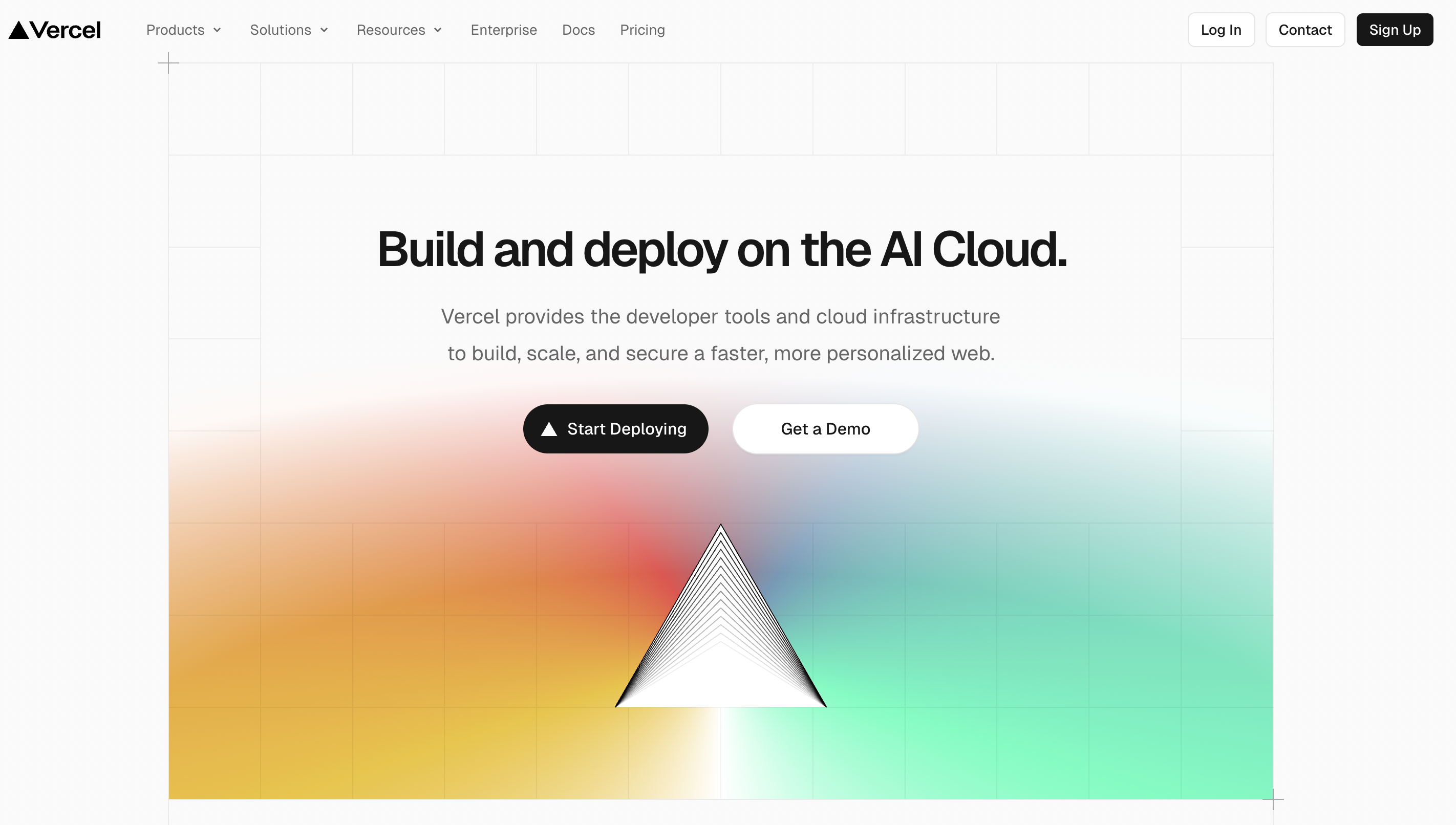
1. Vercel — Best for Frontend-First Teams
- Ideal for: React/Next.js shops demanding slick preview workflows.
- Strengths: Framework-aware incremental builds, instant preview branches, global CDN edge, and tight serverless/edge function support.
- Build pipelines: Highly optimised for Next.js, speeding up large incremental deploys.
- Drawback: Enterprise features and high-concurrency usage ramp costs quickly.
- Decision tip: Pick Vercel if DX and server-side rendering patterns (ISR, SSR) matter more than granular cost controls.
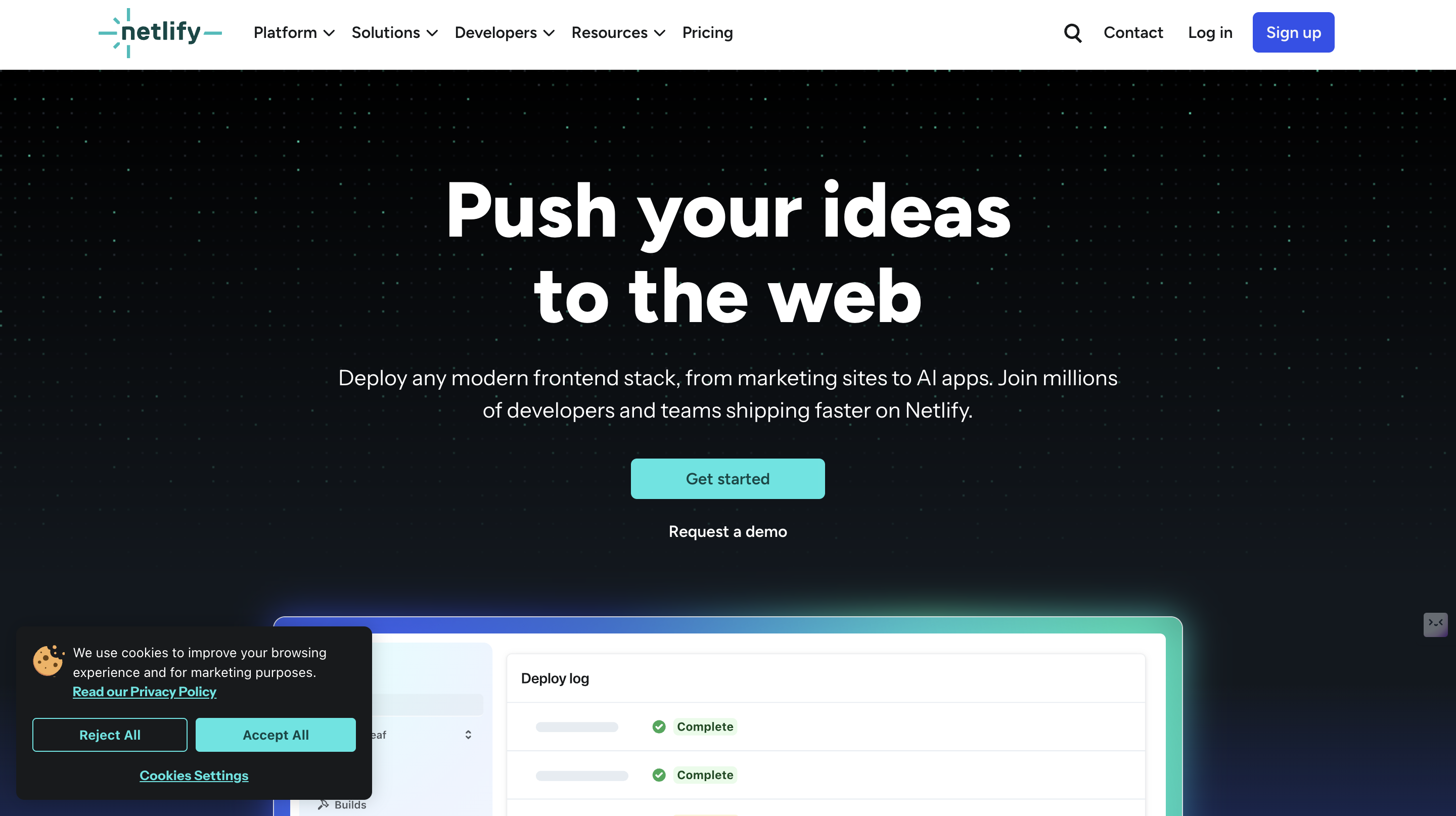
2. Netlify — Developer-Friendly Static Site Hosting and Workflows
- Great for: Teams centred on static site hosting with occasional serverless tasks.
- Strengths: Flexible build pipelines (plugins, cache control), huge community, built-in forms/functions, and worldwide CDN edge.
- Drawback: Lower tiers cap build minutes and concurrency; heavy publishers must budget for upgrades.
- Decision tip: Reach for Netlify when simplicity, combined with an extensive plugin ecosystem, accelerates delivery.
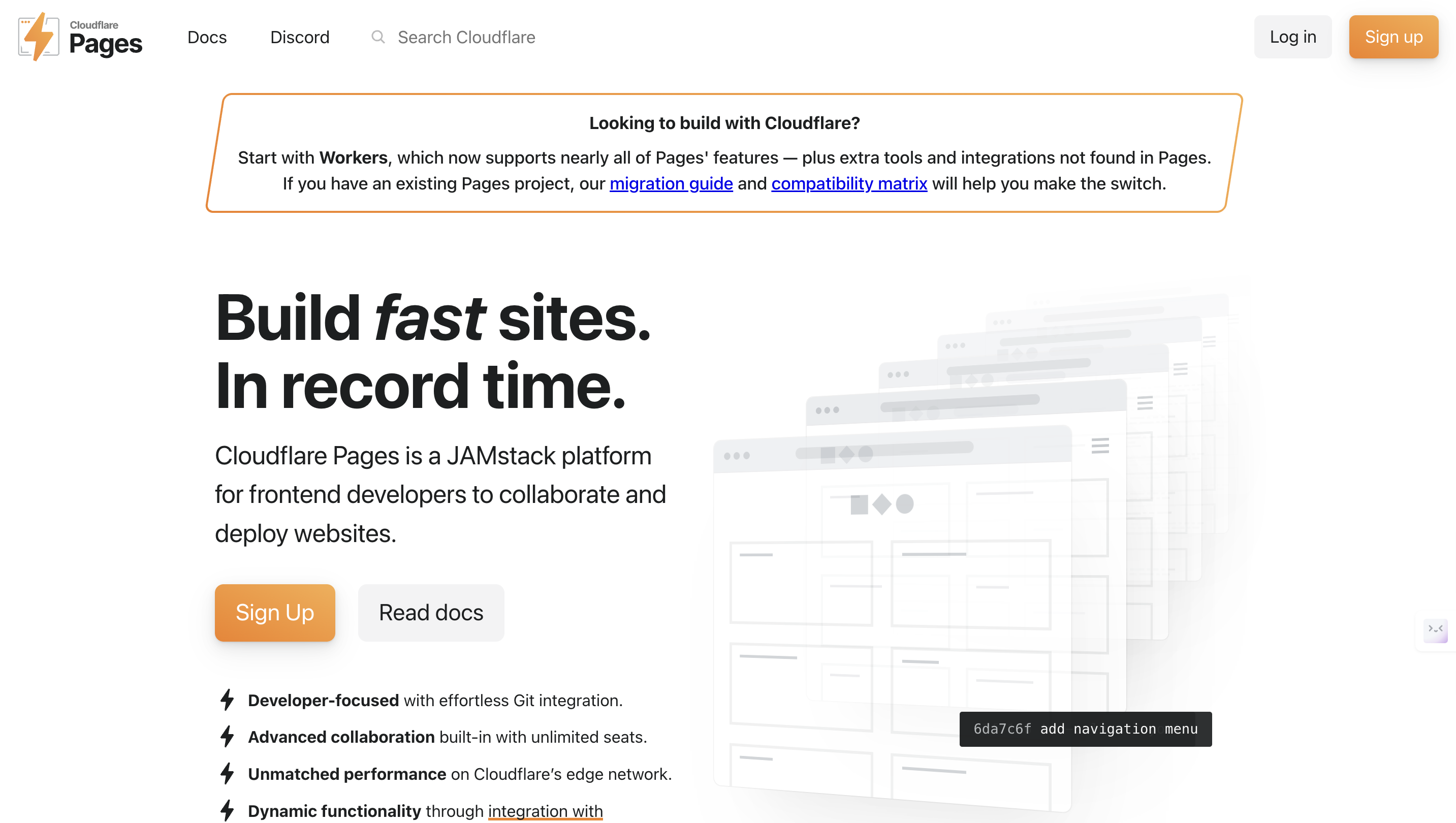
3. Cloudflare Pages — CDN-First Static Hosting with Edge Compute
- Best for: Performance-obsessed teams targeting sub-100 ms global response times.
- Strengths: Cloudflare’s massive edge network, Workers for serverless logic at the edge, and minimal cold-starts.
- Drawback: Workflow and opinions are lighter than those of Vercel/Netlify, so some frameworks require additional configuration.
- Decision tip: Choose Cloudflare Pages when raw edge speed and worldwide POP density top your requirements list.
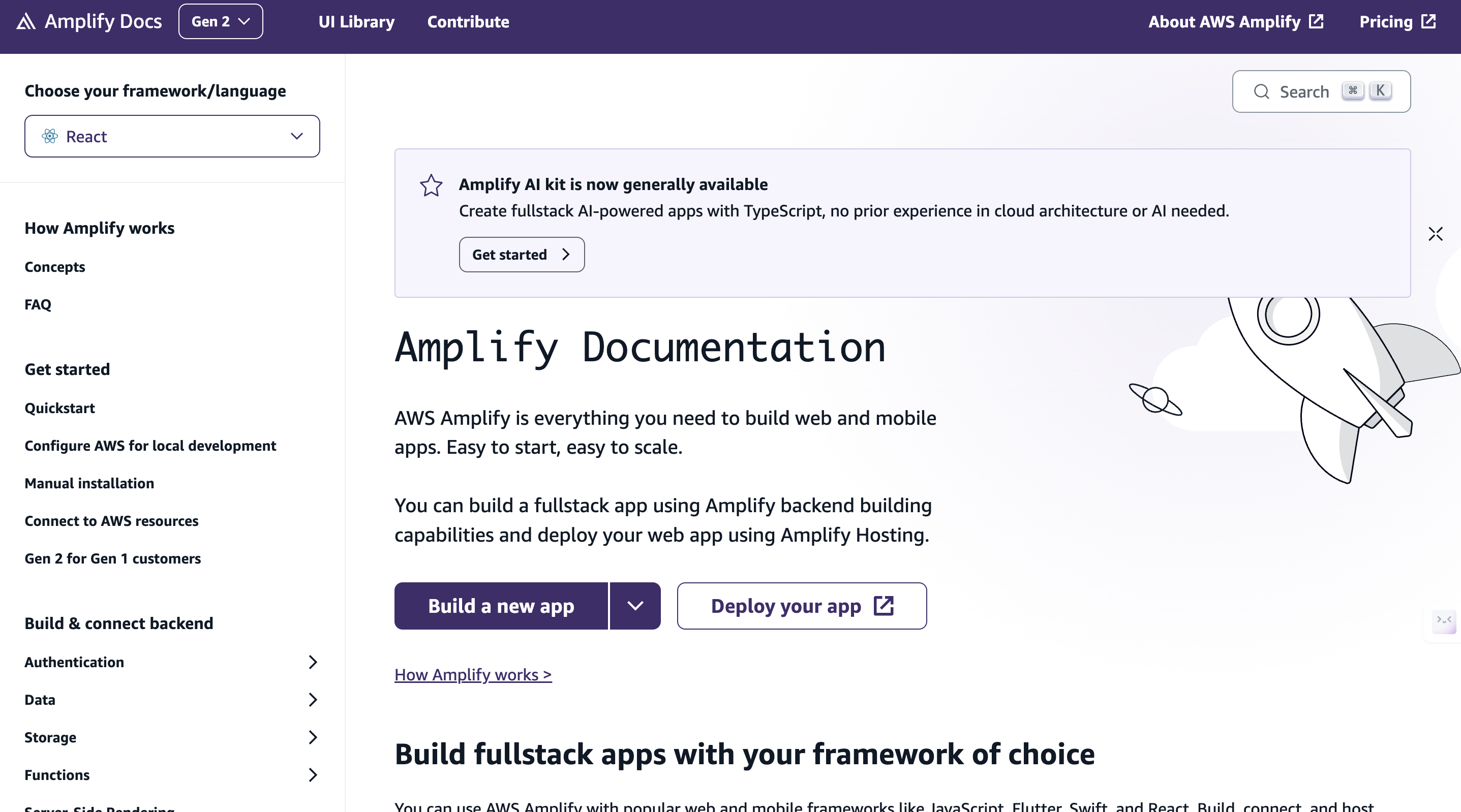
4. AWS Amplify — Integration with AWS Ecosystem
- Suited to: Organisations already steeped in AWS services.
- Strengths: One-click hooks into Lambda, API Gateway, Cognito, GraphQL, plus S3-backed static assets behind CloudFront.
- Build pipelines: Leverage AWS CodeBuild under the hood and support monorepos.
- Drawback: AWS complexity and piecemeal pricing make TCO forecasting tougher.
- Decision tip: Amplify shines where you need AWS-native services, compliance tooling, and enterprise-grade scale.
5. Render — Simpler Full-Stack Hosting for Teams
- Best for: Teams seeking a balance between managed convenience and flexibility.
- Strengths: Auto-deploys from Git, static site hosting, background workers, and cron jobs without Kubernetes toil.
- Drawback: Smaller ecosystem; verify CDN edge and function parity for globe-spanning sites.
- Decision tip: Consider Render if you want straightforward pricing and a full-stack flavour without deep vendor lock-in.
6. GitHub Pages (with Actions) — Cost-Effective Static Site Hosting
- Perfect for: Documentation, personal portfolios, or budget-driven small sites.
- Strengths: Free hosting for public repos, GitHub Actions as build pipelines, and a trivial Git-based workflow.
- Drawback: Limited serverless and CDN features; scaling global traffic requires extra tooling.
- Decision tip: Start with GitHub Pages for cost-sensitive projects, then graduate to a CDN-focused host once edge compute needs emerge.
Cost, Procurement, and Vendor-Lock Considerations
Before choosing a Jamstack host, weigh the real costs and lock-in risks.
- Baseline Usage: Measure current build minutes, bandwidth, and function invocations to select plans that are appropriately sized.
- Uncover Hidden Costs: Watch for overage fees, extra function invocations, and premium support charges.
- Enforce SLAs: Require clear uptime commitments and remediation clauses.
- Plan for Exit: Ensure site assets, build scripts, and environment variables can be exported cleanly.
- Test Before Committing: Run production-like traffic on a staging subdomain to validate real-world costs before signing long-term contracts.
How to Validate a Platform During a Short Trial
Follow these practices to validate a platform during a short trial:
- Deploy a representative site, including functions, and record build durations.
- Run synthetic tests from multiple regions to gauge CDN edge latency.
- Stress-test serverless functions for cold-start and concurrency behaviour.
- Inspect log availability and hook metrics into your alert system.
Also Read: A Comprehensive Guide on Choosing the Best Hosting Type for Your Website
Hosting For Success
Match your priorities—DX, edge performance, AWS integration, or pure cost—to the platform strengths above, then shortlist two candidates. Run a one-week trial that mirrors production traffic, confirm SLA terms, and document an exit plan before committing.
At BigRock, we simplify the parts of hosting that often create friction, such as DNS management, TLS setup, and ongoing monitoring, so you can focus on evaluating the right Jamstack host without worrying about deployment risks. Contact our team for more details!