Home » Business » New Domain Extensions: A Practical Guide to Expanding Your Brand’s Online Presence
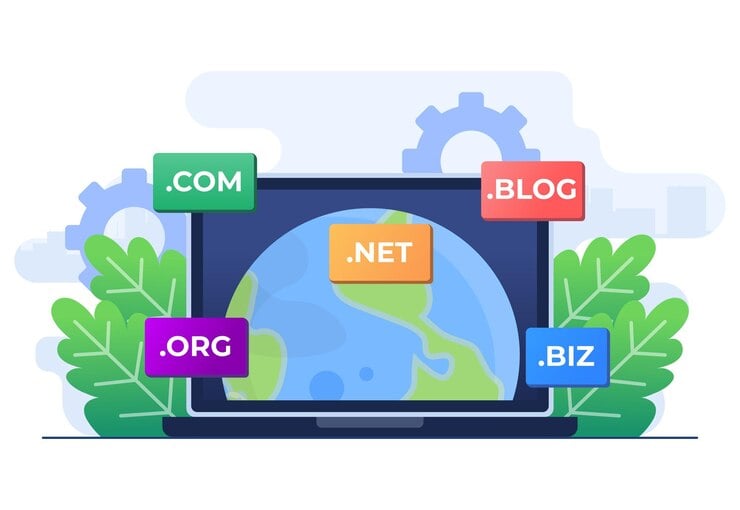
| New domain extensions, also called new generic top level domains (new gTLDs or nTLDs), are DNS suffixes introduced beyond legacy TLDs such as .com, .net, .org and country codes like .in. They include industry or purpose‑specific endings such as .tech, .app, .store, .io and many more, operated by ICANN‑approved registries. Technically, nTLDs behave like any other TLD for DNS, email and hosting; the real differences lie in branding potential, domain availability and how users perceive each extension. |
If you have ever tried to register a short, catchy .com or .in, you already know how crowded the space is. Many Indian MSMEs and startups end up compromising with long, hard‑to‑remember names that weaken brand recall.
New domain extensions give you fresh options that clearly signal what your business does. Instead of forcing your brand into whatever .com is left, you can choose nTLDs that support your positioning.
What are New Domain Extensions and Why Do They Matter Now?
New domain extensions are modern alternatives to classic endings like .com or .in, such as .tech, .app, .store, .online or .ai. They are no less “official” than older TLDs; the rollout of new gTLDs has simply expanded the naming space so more brands can find meaningful domains.
For Indian small businesses this means it is finally realistic to get a short, on‑brand domain without strange spellings or hyphens. A name like brand.store or brand.tech instantly communicates your category and doubles as a marketing message. This helps smaller firms compete with larger players that locked in the best .coms years ago.
Acceptance has also improved. Users increasingly recognise high‑quality nTLDs, especially in tech, ecommerce and digital services. The key is to choose a relevant extension and back it with a credible website, not a gimmicky name.
Choosing Between .com, .io and nTLDs like .tech, .app, .store
Most founders today compare .io vs .com, and then look at .tech, .app or .store when obvious names are already taken. .com still wins for universal recognition and trust. If you target a broad Indian or global audience, a clean .com or .in is often the safest first choice.
.io has become popular with tech startups because of its “input/output” association and modern image, even though it began as a country‑code TLD. Expert comparisons note that developer communities embrace .io, while mainstream consumers still lean to .com. For B2B SaaS, dev tools or deep‑tech products, that trade‑off can be worth it.
Specialised nTLDs sit in the middle:
- .tech fits IT services, SaaS products, hardware and consultancies.
- .app works for app‑first businesses as a clean download or product URL.
- .store clearly signals ecommerce or D2C retail.
Search engines treat reputable nTLDs similarly from a technical standpoint; what matters more is quality content, UX and consistent branding. A practical approach for Indian MSMEs is:
- If you can get a short, brandable .com or .in, secure it as your primary domain.
- If not, weigh .io vs .com carefully for tech ventures, and consider .tech, .app or .store where the extension itself strengthens your story.
- Use your provider’s domain search to see these options, side by side on price and availability, before deciding.
Using New Domain Extensions Strategically: Primary Site, Campaigns and Portfolio
Instead of viewing domains as a one‑time, one‑choice decision, think in terms of a small portfolio. Your primary domain (often .com, .in or a strong nTLD like .tech) hosts the main site. Supporting nTLDs like .store, .app or .jobs then redirect to specific sections or microsites, making journeys short and memorable.
For example, a SaaS brand could live on brand.tech, with brand.app sending users straight to the web app or mobile download page. A retailer might keep the main company site on .in, while brand.store becomes the ecommerce front that is printed on packaging and ads.
Future Trends and What Small Businesses Should Actually Do Next
From 2026, large enterprises will be able to apply for their own top‑level domains (dotBrand TLDs such as .yourbrand), under ICANN’s next new gTLD round. These come with high fees and detailed technical, legal and policy requirements. They are powerful, but realistically out of scope for most MSMEs for now.
For Indian small businesses and early‑stage startups, the practical path is simpler. Focus on existing new domain extensions that already work across browsers, search engines and hosting platforms. Decide your primary domain based on audience expectations, then add one or two high‑fit nTLDs for campaigns and protection, and use them consistently across social bios, email IDs, packaging and offline branding so customers remember your full address.
When you are ready to act, search and register your preferred new domain extensions with BigRock, and bundle them with reliable hosting and security solutions to build a trustworthy, long‑term online presence from day one.