| Browser warnings erode trust faster than poor design. Simple security choices quietly protect conversions, search visibility and credibility while removing friction that makes users hesitate. |
You launch a shiny new website, share the link with clients, and watch the first visits roll in. Instead of the reassuring padlock, every modern browser flashes a stark “Not secure” label.
Suddenly, contact-form submissions dry up, shopping-cart check-outs stall, and even long-time customers hesitate. The problem isn’t your product or your copy; it’s the absence of SSL encryption that turns plain HTTP into trusted HTTPS. One certificate instantly restores the padlock icon, seals traffic against snoopers, and wipes the warning from view.
Let’s find out why SSL is now non-negotiable, when a free certificate is fit for purpose, the fastest ways to activate hosting with free SSL, and the operational habits that keep your site locked down for good.
Why SSL Is Non-Negotiable Today
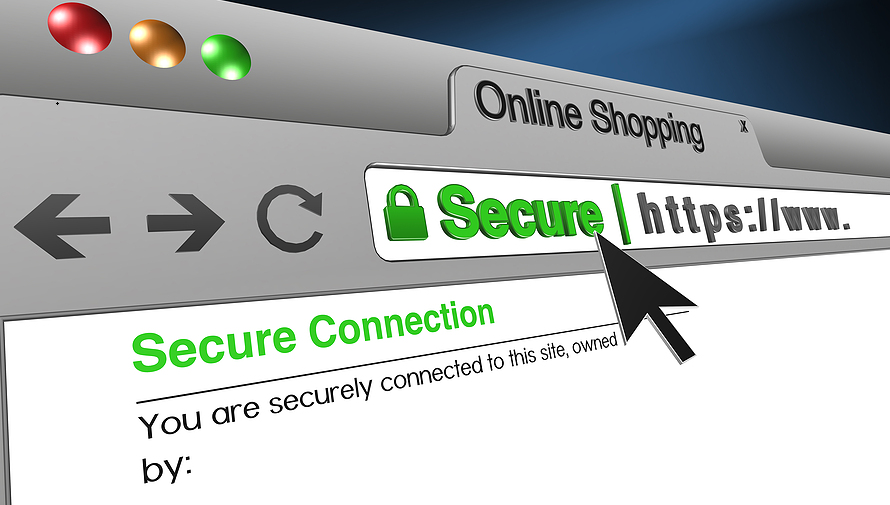
SSL/TLS wraps every browser-to-server request in encryption, so data such as logins, emails and payment details can’t be read in transit. The result for visitors is simple: a padlock and HTTPS in the address bar, a visual cue that the connection is private. Without it, modern browsers display red warnings that deter users and cut conversions.
Beyond trust signals, HTTPS has become a baseline for performance features (HTTP/2, HTTP/3) and a modest ranking factor in search results. Site owners who skip SSL therefore lose on user experience as well as visibility.
Crucially, both free and paid certificates use identical encryption algorithms; a free domain-validated (DV) certificate protects traffic just as effectively as a premium option. The difference lies in identity assurance and support, which matters only in specific, higher-risk scenarios.
Free vs Paid SSL: Which Is Fit for Your Site?
Choosing between free and paid SSL is less about cryptography and more about risk tolerance, warranty and workflow.
Free Certificates
- Validation level: Domain only (DV).
- Cost: Free, issued in seconds via automated protocols such as ACME
- Support: Community forums or your hosting provider’s basic help
- Trust indicators: Standard padlock; no organisation name in the browser
Paid Certificates (OV/EV)
- Validation level: Organisation (OV) or Extended (EV) identity checks
- Cost: Annual fee plus possible installation charge
- Support: Vendor ticketing, SLAs and often a warranty against mis-issuance.
- Trust indicators: Company name displayed in the certificate details, sometimes in the address bar
Decision framework:
- Informational, brochure or portfolio sites – Free SSL is usually enough.
- Login-enabled portals, membership communities or web apps – Free DV covers encryption; consider paid options if you need formal support guarantees.
- eCommerce, donations or any site handling card data – Paid OV/EV certificates add verifiable identity and warranty, which can boost consumer confidence during checkout.
Trade-offs to weigh:
- Cost vs identity assurance – Encryption is free; brand verification costs.
Renewal cadence – Free certificates often renew every 90 days; ensure automation. - Wildcard and multi-domain coverage – Some free CAs limit SANs or wildcards; paid options may simplify complex scenarios.
| Pro Tip: Start with hosting plans that bundle free SSL for fast launches. If your business grows into card processing, regulated data, or brand-sensitive transactions, upgrade to a paid OV or EV certificate without disrupting existing traffic. |
Implementation Paths for Hosting With Free SSL
You know you need SSL; now, how do you deploy it with minimum hassle? Three practical routes cover nearly every use case.
Hosting-Integrated Free SSL (Recommended for Most SMEs and Agencies)
Many hosting providers embed Let’s Encrypt or ZeroSSL into their control panels. Activate a toggle, and the platform issues, installs and auto-renews the certificate behind the scenes.
For small teams and multi-site agencies, this one-click route is unbeatable: no manual CSR generation, no renewal scripts, and no downtime risk. Choose this path if speed-to-launch and limited operations bandwidth are your top priorities.
ACME Clients and CI/CD Integration (Best for Developers and Agencies With Pipelines)
Developers working with automated deploys often prefer direct control through ACME clients such as Certbot or open-source libraries. Scripts run within CI/CD pipelines to request, validate and install certificates without human intervention.
Benefits include zero-downtime renewals, audit logs and multi-domain orchestration across staging and production. The trade-off is engineering hours to set up and maintain the workflow, worth it if you already manage infrastructure as code.
DNS-Based Validation and Wildcard Certificates (When You Need Subdomain Coverage)
Wildcard certificates protect all subdomains (*.example.com) at once. To obtain one, DNS-01 validation is typically required: you add a special TXT record to prove domain control.
API-ready DNS providers make this simple, but non-technical users may find the step daunting. Choose DNS validation when you operate many subdomains, multi-tenant apps, or when HTTP validation isn’t possible due to restrictive hosting environments.
| Pro Tip: Whichever route you choose, enable automatic renewal. Expired certificates break trust instantly, and browsers offer no grace period. |
Operational Considerations and Best Practices
SSL installation is day one; stewardship is forever. Keep these habits at the front of your mind.
- Renewals and monitoring: Automation is the first line of defence, but monitoring alerts are the safety net. Use dashboards or uptime tools that warn you 30 days before expiry so you have time to react.
- Wildcard coverage and SANs: If you juggle blogs, shops, and app subdomains, a wildcard or multi-domain (SAN) certificate reduces overhead. Confirm your CA supports the combination you need before launch.
- Support and incident response: Free certificates lack warranties and dedicated support; your hosting provider may help with basic issues, but businesses processing payments should have a defined support path and consider paid certificates with warranties.
- Compliance and payments: SSL encryption protects data in transit, but doesn’t on its own meet PCI-DSS or GDPR obligations. Use SSL as one layer, then follow broader compliance checklists relevant to your sector.
Practical checklist:
- Enable host-integrated automation or an ACME client.
- Store DNS or API credentials securely if using DNS-01.
- Centralise monitoring across all client sites.
- Keep an offline calendar reminder for extra redundancy.
| Pro Tip: Running 10 or more client sites? Centralise SSL issuance and renewal through your hosting platform’s API or a single ACME client. One command refreshes every certificate, adds audit visibility, and eliminates the midnight “certificate expired” fire drill, critical for agencies juggling multiple brands. |
Secure Your Site Now
SSL is no longer a luxury; it’s baseline hygiene that protects visitors and preserves credibility. By choosing hosting with free SSL, you sidestep the biggest hurdles, including visible trust signals, encryption, and hassle-free renewals, all at no extra cost.
For most SMEs and agencies, that’s the perfect fit, while transaction-heavy sites can comfortably upgrade to paid validation when brand assurance or warranties become essential.
If you’re ready for peace of mind and friction-free security, explore a plan like BigRock’s that bundles hosting with free SSL and simple upgrade paths.
Secure your site now by activating automatic SSL!