Home » Products » Security » Domain Phishing Protection: 8 Proven Tips to Safeguard Your Website & Brand Identity
| Domain phishing protection refers to a set of security measures designed to prevent attackers from creating look-alike domains, spoofing brand websites, or stealing sensitive user information through cloned login pages and fraudulent emails. This involves securing your DNS records with DNSSEC, authenticating outbound email with SPF, DKIM, and DMARC, monitoring for impersonations, and locking down domain transfer settings. As deepfake and generative AI tools make it easier for scammers to replicate websites and trick users, businesses must adopt a layered, proactive defense strategy. |
Deepfake fraud attempts skyrocketed by 3,000% in 2023, driven by easy-to-access generative AI tools that enable scammers to create fake websites, domains, and identities in minutes.
As the line between reality and fiction blurs, businesses are under pressure to act quickly or risk losing customer trust, data, and revenue. The good news? A few strategic moves can drastically cut your risk.
This guide provides a week-long, action-ready plan to block the most common domain phishing threats and other threats. Read on!
How Domain Phishing Works: A Quick Breakdown
Before you defend, it helps to understand the attack flow.
- Fake Domain Registration: Criminals buy look-alike domains (e.g., xn--paypal-security[.]in), swap letters (e.g., amaz0n-india[.]co), or use Unicode homograph tricks.
- Website Cloning & Typosquatting: Attackers copy your logo, colours and content to harvest logins, payment details or OTPs. Some pages redirect victims to genuine portals after collecting their credentials, making detection more challenging.
- Mass Link Distribution: Email blasts, SMS “offers,” social media ads and QR codes push unsuspecting users to the spoofed domain.
| Also Read: Domain Shadowing: The Silent Technique Behind Phishing Campaigns |
8 Actionable Tips for Bullet-Proof Domain Phishing Protection
Layering the following anti-phishing strategies creates a defence-in-depth shield around your brand. Each tip starts with a one-sentence takeaway for quick scanning.
Tip 1: Register Defensive Domains Early
Buying obvious misspellings, new gTLDs, and regional ccTLDs around your brand is the cheapest form of insurance.
- Secure common typos (yourbrand.com), hyphenated variants and country extensions (.in, .co.in, .sg)
- Register emerging TLDs (.zip, .app, .shop) before criminals do
- A defensive portfolio usually costs a few thousand rupees a year, far less than breach remediation
Tip 2: Enable DNSSEC and Always Use HTTPS
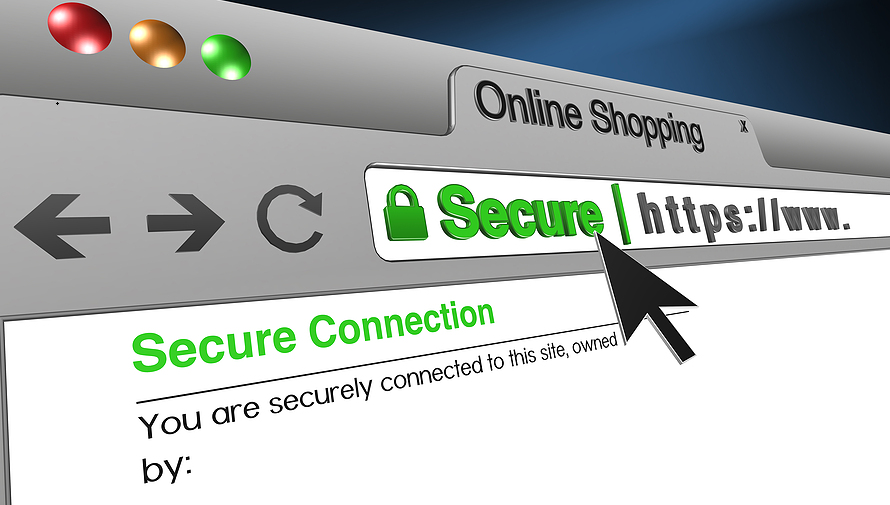
DNSSEC authenticates DNS responses, while HTTPS encrypts traffic.
- Ask your registrar to add DS records and test them with the Dig command.
- Enforce HTTPS across every subdomain, including static landing pages and image hosts.
- Utilise free certificate authorities, such as Let’s Encrypt, to eliminate cost barriers.
Tip 3: Deploy SPF, DKIM and DMARC (Your Email Shield)
Here’s how to do it effectively:
- Start with monitoring mode (p=none), review reports, then move to p=reject
- Align “From” headers in marketing tools with your root domain to prevent false positives
- Test configurations with free analysers like dmarcian or Google Postmaster
Tip 4: Continuous Brand and Domain Monitoring
The faster you spot an impersonation, the fewer victims fall for it.
- Set Google Alerts for your brand and “login,” “secure,” “payment,” and other sensitive keywords
- Subscribe to threat-intel feeds that list newly registered domains similar to yours
- Monitor certificate-transparency logs to catch rogue SSL certificates
Tip 5: Lock Down WHOIS and Transfer Settings
Registrar Lock and WHOIS privacy stop hijackers and social engineers at the gate.
- Enable Registrar Lock so domains cannot be transferred without explicit approval codes
- Utilise WHOIS privacy to conceal admin emails that are often targeted by criminals for phishing. BigRock’s domain privacy guide shows the steps
- Secure your domain with BigRock today to gain both lock and privacy in a single dashboard
Tip 6: Secure Domain Transfer Workflows
Even legitimate staff can misstep during a hand-off.
- Require two-factor approvals for outbound transfers and keep audit logs.
- Familiarise yourself with ICANN’s “60-day lock” and dispute-resolution process so you can freeze suspicious requests.
Tip 7: Educate Employees and Customers
Technology fails if people click blindly.
- Simulated phishing every quarter can reduce click-through rates by 60 percent within a year. Tools like GoPhish or KnowBe4 make campaigns simple.
- Use real phishing domain examples (irctc-login[.]zip) in training so staff recognise local threats.
- Publish a “How to verify our site” page for customers, listing official URLs and email addresses.
Tip 8: Prepare an Incident Response and Recovery Plan
A written playbook trims panic and downtime.
- Detect: Monitor alerts and user reports.
- Contain: Block malicious domains and notify customers.
- Eradicate: File takedown requests and rotate credentials.
- Restore: Audit logs, patch gaps, update policies.
Make sure you aim to reclaim any hijacked domain within 72 hours and keep CERT-In and registrar hotlines handy.
Choosing a Trusted Partner for Domain Security
Not all registrars deliver equal protection. Use this litmus test:
- ICANN accreditation and India-based 24×7 support
- Free DNSSEC and easy SSL installation
- Rapid takedown assistance and dispute guidance
- Robust WHOIS privacy and Registrar Lock
Remember, your domain registrar isn’t just a service provider; it’s your frontline defence against impersonation, hijacking, and brand abuse. Choosing a partner that prioritises security can mean the difference between quick containment and costly damage.
| Also Read: Prevent Domain Hacking: Security Tips for Website Owners |
Final Words
Domain phishing protection requires action, not aspiration. Implement the tips above, and you will block the majority of domain threats before they reach your customers.
Additionally, make domain security a continuous priority, not a one-time fix. Regularly audit your settings, stay updated on emerging threats, and train your team to recognise warning signs. A proactive approach not only protects your website and data but also reinforces customer trust in your brand.
At BigRock, we make it easy to secure your online presence with industry-grade tools and support. From DNSSEC and WHOIS privacy to SSL certificates, domain monitoring, and rapid takedown assistance, we offer everything you need to stay one step ahead of attackers.
Get in touch with our team for more details!