A domain name is a technical asset and a decision that shapes how your brand is discovered, remembered, and talked about.
For startups, it often sets the tone before you make a pitch and push your product to be seen. It’s one of the first and most crucial elements of startup branding, influencing everything from perception to discoverability.
But a poorly planned domain can lead to missed traffic, confused customers, lost trust, and long-term limitations that are expensive to fix later.
A clear domain strategy shows you’ve thought ahead, that your brand is protected, and that you’re easy to find in a crowded market. This kind of clarity builds confidence. We’d go on to say that it’s something no marketing budget can buy after the fact.
In this guide, you’ll learn why your domain name plays a far more strategic role than most founders realise. Read on!
What Are the Risks of Getting a Domain Strategy Wrong?
A weak domain strategy can quietly undercut everything you’re building.
You might not feel the damage immediately, but over time, the gaps start to show in the form of missed traffic, lower trust, and more challenging customer retention.
In a digital space where names compete for attention and trust, getting your domain choice wrong can make your brand look second-rate, even if your product isn’t.
Remember, the risks aren’t just about losing clicks. They impact how you’re perceived, how you grow, and what it costs to fix the problem later.
Here’s a breakdown of what can go wrong when the domain strategy doesn’t hold up:
Risk |
Consequences for Startups and Site Owners |
| Not owning the exact-match domain | You drive traffic, credibility, and backlinks to someone else. That value can’t be recovered later. |
| Choosing a non-intuitive domain extension | Users default to .com. If you’re on a different TLD, they mistype it or land elsewhere, usually a competitor. |
| Delaying the domain purchase | Domain prices rise fast. A name you could afford last month may now belong to someone else. |
| Going live with a temporary domain | You build brand value into a placeholder, then lose momentum or trust when you switch later. |
| Using hyphens, numbers, or hard-to-spell words | You increase bounce rates, lose referrals, and fail the radio test. Nobody types it right the first time. |
| Ignoring defensive registrations | Competitors or squatters register lookalikes. You lose traffic and face legal or PR issues. |
| Using a free or unstable TLD (like .tk) | These carry a reputation for spam or volatility. You lose trust before visitors read a word. |
| Choosing a name that’s too close to another | You open yourself to legal risk, user confusion, and zero brand distinction. |
| Prioritising creativity over clarity | If the name doesn’t tell users what you do, you add friction. That means more ads, more explanation, and more cost. |
5 Benefits of Setting Up a Well-Conceived Domain Strategy
You’ve got the product. You’ve launched the site. You’re running ads, building traction. But then a customer sends a message: “Is this your other site too?” Attached is a domain that looks like yours, except it’s slightly off. You didn’t buy it, and now it’s live, selling knockoffs, running ads, or worse, stealing traffic.
Most site owners make the same mistake. What they don’t realise is that domain strategy isn’t just branding—it’s startup branding, risk control, growth prep, and reputation management baked into one. A good one pays off long before your legal team ever gets involved.
Here’s how a sharp domain strategy empowers your brand:
Benefit #1: Control Over First Impressions
You can spend weeks fine-tuning your site design and messaging, but if someone types your name into a search engine and lands on a suspicious copycat, you’ve already lost them.
First impressions are made in a split second; on a search result, in a browser bar, or through a shared link. The domain name is the first thing people register. Get it wrong and your brand looks careless before the page even loads.
Why It Matters:
- Own the “Main Door” Experience: Your domain appears in cold emails, social bios, paid ads, and DMs. People make split-second decisions based on how it looks.
- Shape Brand Expectations Instantly: Clean, intuitive domains feel legitimate. Unfamiliar or awkward ones make users think twice or cause them to bounce altogether.
- Cut Down Bounce from Paid Clicks: If your ad links to a domain that doesn’t look trustworthy, you’ve lost that spend before the page renders.
- Avoid Bad Assumptions: People associate dodgy domain names with spam, malware, or scams. Don’t give them a reason to second-guess your brand.
- Keep Competitors from Writing Your Story: If you don’t control the root domain or key variants, someone else can capture your traffic and tell their version first.
Ask yourself:
- Would someone click on this domain without hesitation?
- Does it look like a credible brand or a placeholder?
- If someone else used a similar domain, would it confuse our audience?
Benefit #2: A Clear Path for Expansion
Startups are required to be agile and adaptive. A product you didn’t plan to build in January might be in beta by June. If your domain strategy doesn’t account for growth, you’ll be buying back what you could have secured for $15, or worse, negotiating with someone who saw the gap before you did.
Why It Matters:
- You Launch Without Blockers: Expansion should never be delayed because you can’t get the matching domain. If you already own it, you’re ready.
- You Avoid Painful Buybacks: Founders often end up paying thousands to retrieve a domain they skipped when it was cheap and available.
- You Prevent Brand Inconsistency: Products that live on mismatched subdomains or awkward URLs weaken your brand story and confuse your audience.
- You Hold Naming Flexibility: Reserved domains provide you with the flexibility to pivot, rename, or reposition without requiring a full rebrand.
- You Protect Future-Facing IP: If someone else registers domains related to your upcoming services, your options quickly narrow, and legal costs escalate.
Ask yourself:
- What domain names will I wish I’d bought six months from now?
- Which regions, products, and features might need their URLs?
- What fallback naming options do I want to keep available?
Benefit #3: Brand Defence on Autopilot
It doesn’t take much to spoof a brand; one swapped character or a clever misspelling is all it takes. Some impersonators create phishing sites, while others capture traffic. You won’t catch every version, but a solid domain strategy can close off the obvious gaps that scammers and squatters target first.
Why It Matters:
- You Limit Easy Impersonation Routes: Owning typo domains and lookalikes makes it harder for bad actors to pretend they’re you.
- You Defend Your Brand’s Real Estate: Squatters love high-growth companies that forget to secure ccTLDs and alt endings. Don’t give them an entry point.
- You Control Search Confusion: People will search using what they think your domain is. If you own the alternatives, you can redirect them back.
- You Reduce Support Tickets and Trust Loss: Fake domains often lead to frustrated users emailing your team, thinking they’ve been scammed.
- You Stop Internal Link Mistakes: Even your own team might mistype your URL on slides or PDFs. Catch the fallout with redirects from lookalikes.
Ask yourself:
- Have I listed the most common typos of our domain?
- Is anyone registering versions of our name in other countries?
- Are we seeing support queries related to impersonators?
Benefit #4: SEO and Discoverability Built In
Most people focus on what goes on the page. But your domain can do some of the heavy lifting long before content starts ranking. A smartly chosen name, aligned with your niche or offering, helps users remember you, type you in, and find you again. That’s real search equity, built into your name.
Why It Matters:
- You Become Easier to Find: People search using brand names, not URLs. If your domain reflects your identity, they’ll find you faster.
- You Boost Click Confidence: Descriptive domain names outperform random strings in clickthroughs, especially on search results and social shares.
- You Help Search Engines Classify Your Site: A clear, relevant domain name supports topical authority and can reinforce keyword relevance.
- You Reduce Dependency on Ads: Strong branded search performance means you rely less on paid traffic over time.
- You Reinforce Brand Recall: If people can’t remember how to spell your domain or what it’s called, they’ll end up searching and possibly landing elsewhere.
Ask yourself:
- Does my domain name support our search goals?
- If someone Googles us without the exact name, will we show up?
- Have I tested how people spell or remember our site?
Benefit #5: Security That Scales With You
Domains aren’t just a naming asset. They’re a security vulnerability when left unprotected. If your domain is compromised, through hijacking, DNS poisoning, or lack of email controls, you’re not just losing traffic. You’re losing trust, revenue, and control over what users see.
Why It Matters:
- You Prevent Domain Hijacking Early: Registry locks, secure DNS, and two-factor authentication are low-effort but high-impact.
- You Close Email Spoofing Gaps: Without DMARC and SPF records, anyone can send emails that appear to come from your domain.
- You Avoid Downtime from DNS Attacks: Smart domain hygiene stops you from getting taken offline during an attack or outage.
- You Simplify Audits and Compliance: Clean records, known domain variants, and strong policies help with infosec audits or investor due diligence.
- You Maintain Control as You Scale: As your team grows, access control gets messier. Locking domains down reduces internal risk, too.
Ask yourself:
- Who has registrar access right now, and should they?
- Have I set up DMARC, SPF, and DNSSEC?
- What happens if our domain gets redirected or our records are changed?
The verdict: For startup founders, a thoughtful domain strategy is a proactive way to protect your brand. If you don’t control the obvious variations of your domain, someone else will. Once they do, your customer’s first click, your future product launch, or even your investor deck could point to the wrong place.
A domain strategy keeps you credible, searchable, and in control before legal, SEO, or support ever gets involved. Remember, small, early decisions in this area can yield outsized returns later. It gives you control over how people find and trust you, right from the first click.
How to Choose the Right Domain Name That Actually Supports Your Brand?
Your domain isn’t just a URL. It’s your brand’s entry point. Get it right, and everything else builds from there: credibility, recognition, and consistency. Skip the strategy, and you spend years making up for it.
Tip #1: Stick to .Com If You Want Growth
You can find creative extensions everywhere now. That doesn’t make them reliable. Most people default to typing .com. And rightly so. It is the most popular domain in the world, with 44.4% of global websites using a .com top-level domain:
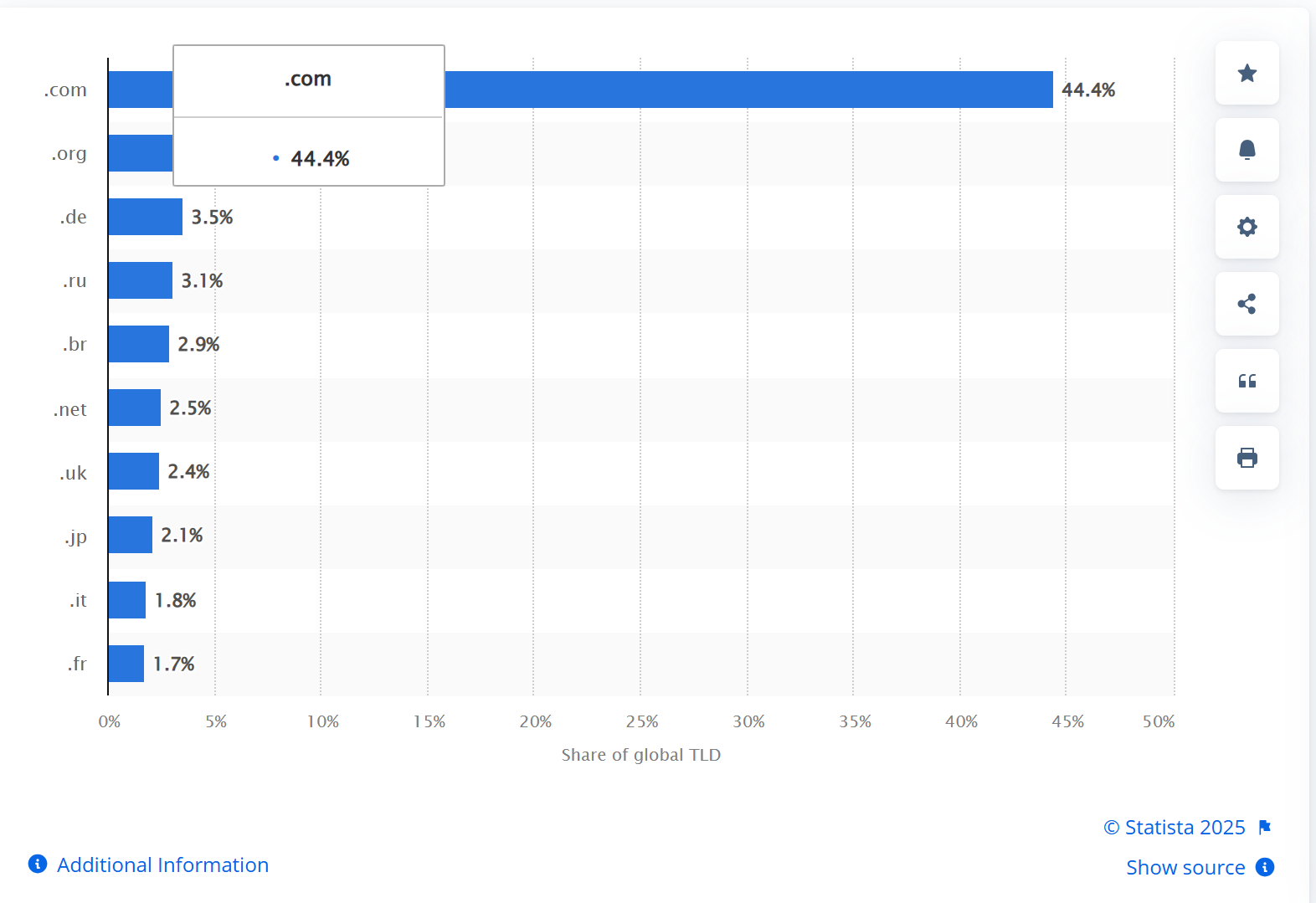
If your domain ends differently, you’re asking your audience to unlearn a habit they’ve had for years. Many won’t. Some will end up on someone else’s site. Some will bounce. You don’t control the outcome.
If .com isn’t available, it’s not the end of the road. But before you build anything around an alternative, ask yourself if you’re solving a problem or creating one.
Tip #2: Your Name Should Suggest What You Do, or at Least Make People Curious Enough to Find Out
A name that hints at what you offer saves time. It reduces friction. Users connect faster when there’s context. Consider domains such as Hotels.com or Investopedia.com:

There’s nothing to explain here. Now compare that to brands like Target where the name reveals nothing unless you’ve gone to the site, seen a commercial, or read a story:
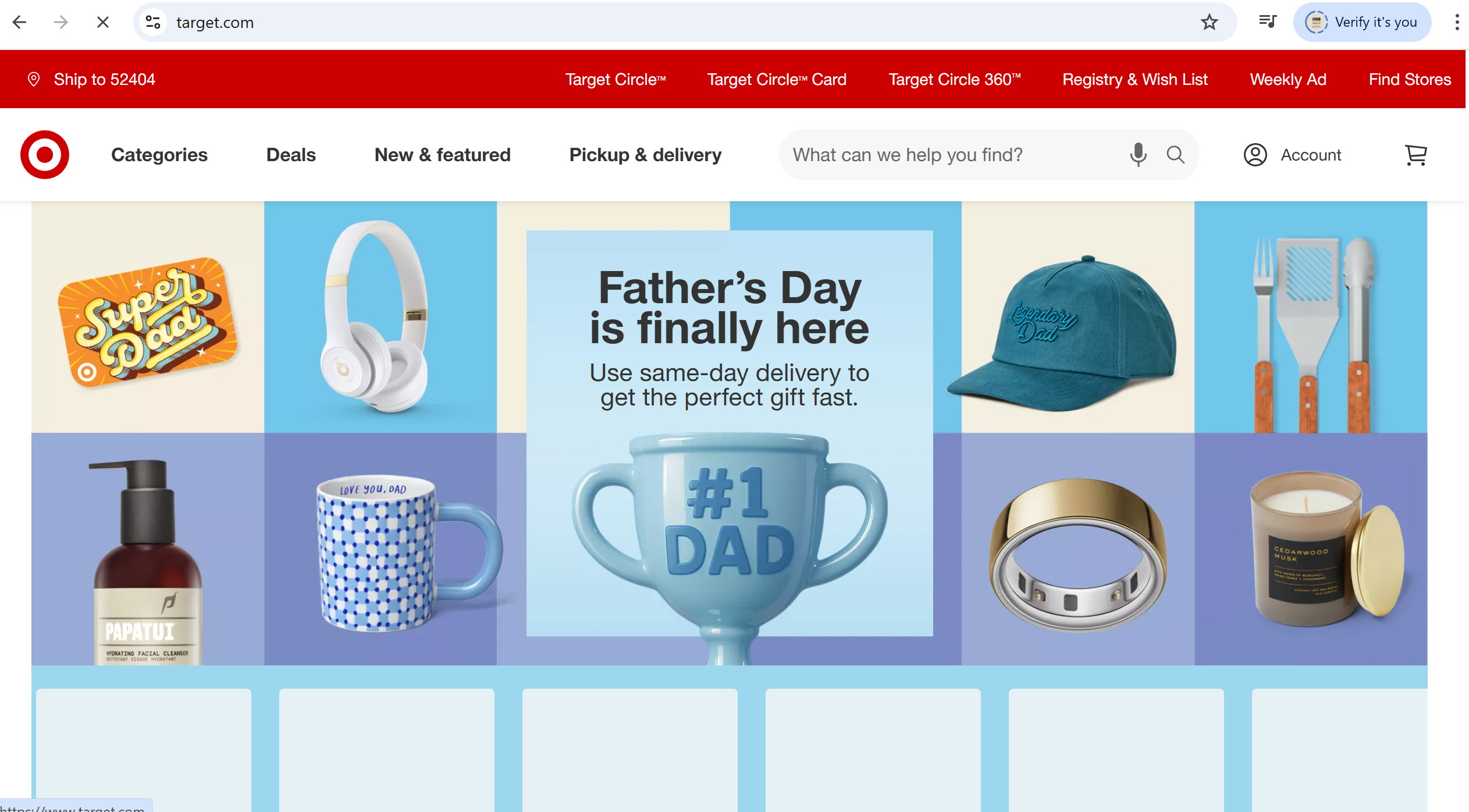
Startups rarely have the luxury of long introductions. A name that suggests value or function gives you a head start.
Tip #3: Short, Clean, Single-Word Names Always Stand Out
There’s no doubt: single-word domains are strong. They’re short, brandable, and hold value. They also come at a premium.
If that’s out of range, focus on a name that is simple, easy to recall, and won’t need constant correction. A word of caution: Avoid forced creativity and prioritise clarity over cleverness.
Tip #4: 3–4 Letter Combinations Can Still Feel Premium
Short domains don’t need to be real words. If you can find a clean acronym or pronounceable pattern, it often works just as well.
A lot of strong brands use three or four-letter domains, especially those following simple consonant-vowel patterns. Typically, these tend to be catchy and easy to repeat (e.g., Zara, Sony, Nike, etc.). These names work because they’re simple and don’t break the user’s mental flow.
Don’t get caught up chasing uniqueness if it means confusing your user. If people hesitate when saying your name out loud, they’ll hesitate to type it too.
Tip #5: Your Domain Needs to Pass the Real-World Test
Say the domain out loud. Would someone hearing it once know how to type it? That’s your real-world check. If it fails here, it doesn’t matter how catchy it looks on paper.
Here are a few tips to remember:
- Avoid hyphens.
- Don’t use numbers.
- Skip anything that introduces doubt about spelling.
These choices might seem small, but they cost attention, and attention is hard to earn twice.
Tip #6: Make the Decision Early; Secure the Right Name Before You Build on It
A business name without the domain is unfinished. Once the idea has legs and the name feels right, lock in the domain before making any moves. Don’t start designing, promoting, or pitching until you own the name online.
Put another way, if you plan to build value in a name, control the asset upfront. Don’t build your brand around something you don’t fully own. Because remember, your domain name sets the tone for every other asset that follows, and it’s a foundational part of startup branding that directly impacts your visibility, trust, and growth.
Pro Tip: Sometimes the name comes first and shapes the business. In other cases, the idea drives the naming. Either way, once you settle on a name, check if the corresponding domain is available. If it’s taken and not for sale, reconsider the name. Every bit of effort you put into branding will strengthen the domain, regardless of who owns it.
Tip #7: Treat Domain Selection like a Branding Project (And Not a Side Task)
Set time aside to evaluate options with your team, weigh pros and cons, and assess both short- and long-term implications of each name.
You must test the finalists with unbiased users; ideally, ones who reflect your target audience:
- Can they spell it?
- Remember it?
- Type it correctly after hearing it once?
- If your brand name is spoken aloud, does the domain match what users would naturally expect?
If the answer is no, keep refining. This is where domain importance shows. Getting it wrong can confuse your audience and dilute your brand before you even get started.
Tip #8: Pick a Registrar That Treats Your Domain like an Asset, Not a Subscription
Not all registrars operate the same. Some lure you in with low first-year prices, then hike the renewal fees without warning. Others bury basic settings behind clunky dashboards or limit control unless you upgrade.
Stick to registrars with transparent pricing, fast support, and clean account access. Ensure you can manage DNS without needing a support ticket. If transferring out feels like a maze, you’re in the wrong place.
You want convenience and control.
Enter the Next Era of Domain Naming with BigRock
The internet moves rather quickly. Trends shift. Platforms come and go. However, one thing remains constant: strong, memorable domain names are becoming increasingly difficult to find.
As global startups flood the market and branding goes multilingual, you can expect a wave of inventive naming. That said, simplicity will still win.
In a world shaped by voice search and instant recall, names that are concise, clean, and easy to remember will continue to rise in value.
That’s why domain strategy can’t be an afterthought. It’s one of the first strategic moves a business makes. So, work on getting the name right. Secure the key variations. And most importantly, partner with a registrar that puts you in control.
BigRock provides founders and growing businesses with the tools to manage domains with ease, offering clean dashboards, transparent pricing, and genuine support when it matters most. Because we believe this is how standout brands begin, and how they keep their edge.
Connect with us to get started!
FAQs
Why is domain strategy important for startups?
A solid domain strategy ensures your startup is easy to find, remember, and trust. It’s more than a URL; it’s your digital identity. A well-chosen domain supports branding, improves discoverability, and helps you avoid costly changes down the line.
What happens if I launch without securing the right domain?
You risk losing traffic, confusing customers, and potentially driving value to another brand. Worse, you might end up paying a premium later, or needing to rebrand entirely, if your domain becomes unavailable or misused.
Does my domain extension (.com, .io, etc.) really matter?
Yes. While alternative extensions are gaining popularity, .com remains the global default. If your domain isn’t on .com and that version is in use, you’re often sending traffic elsewhere. That said, if .com isn’t available, choose an extension that aligns with your audience and ensure your brand messaging is crystal clear.
Should I register domain variations and misspellings?
Absolutely. Defensive domain registrations, like typos, plural forms, or other popular extensions, protect your brand and prevent competitors or squatters from diverting your audience. It’s a small cost now that can save big later.
How do I know if a domain name is brandable?
Brandable domains are concise, straightforward, and easy to remember. They often hint at what your business does or spark curiosity. Avoid names that require constant explanation or correction; clarity should always prevail over cleverness.
What makes BigRock a good domain registrar for startups?
BigRock offers transparent pricing, intuitive dashboards, and reliable customer support, everything a startup needs to manage domains without hassle. Whether you’re just starting out or scaling fast, BigRock gives you control, flexibility, and peace of mind.