Sure, your domain name helps people find your site. But it plays a major role in how your business is perceived online. Despite this, when it comes to selecting the domain extension, most people don’t give it a second thought.
That small detail can:
- Influence how visitors perceive your brand
- Signal your business’s location or target market
- Reveal your industry or niche
- Reflect on how established your business is
Needless to say, choosing the right domain extension builds credibility, improves your visibility in search, and sends the right message to your audience.
This guide breaks down the key types of domain extensions and shows you how to pick one that fits your business goals.
6 Domain Extension Types: What They Mean and How to Use Them Effectively
Your domain extension carries meaning, sets expectations, and influences search results as well as click-through rates.
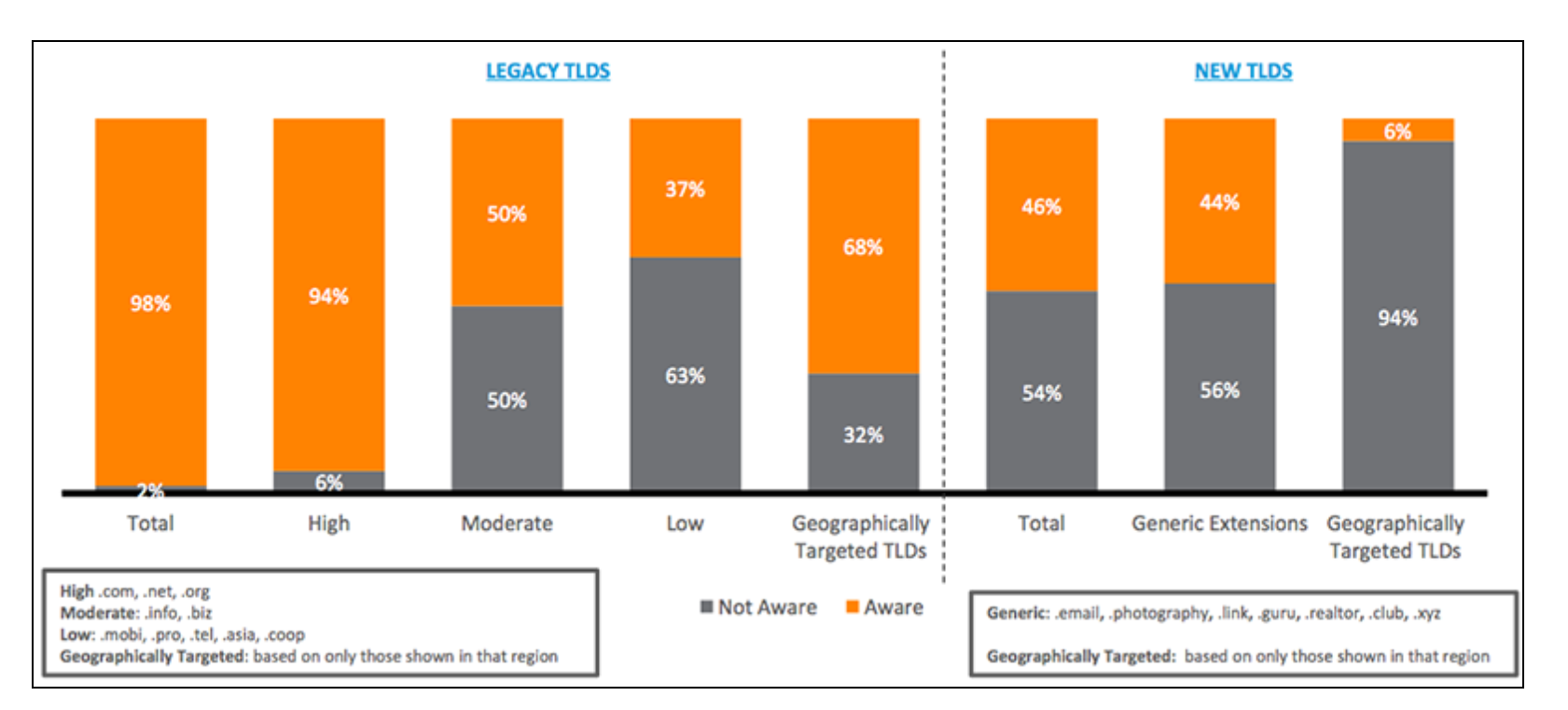
For instance, the choice between in vs com can significantly impact your brand’s perception—while .com is globally recognised, .in caters specifically to the Indian market, making it a strategic choice for businesses targeting that region. Among the legacy domains, .com, .net, and .org achieved a 94% awareness rate.
In comparison, only 50% of people recognised .info and .biz—more than twice the awareness level of newer extensions like .mobi, .pro, .tel, .asia, and .coop, which stood at just 37%.
Clearly, choosing the wrong one can confuse your audience and weaken your brand’s credibility.
To help you get started, here’s a breakdown of the most relevant domain extension types, who they’re for, and how to use them strategically:
1. .com – The Gold Standard
Best for:
Almost everyone
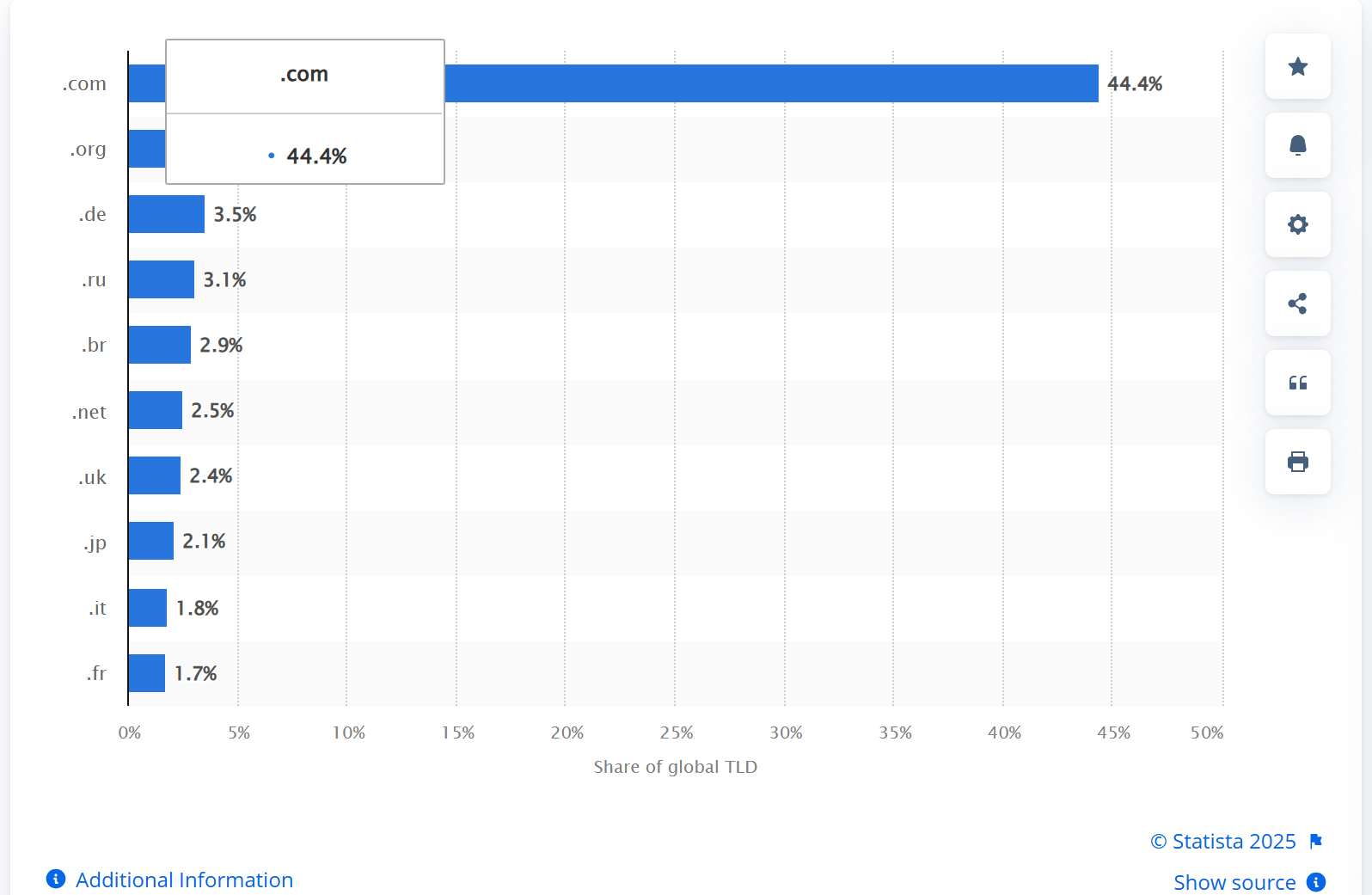
The .com extension is the most recognised and trusted domain ending in the world. Originally meant for “commercial” use, it’s now the default for everything from ecommerce and blogs to service-based businesses.
Why choose it:
- Instantly credible and familiar
- Easy to remember
- Performs well in search engines and backlink outreach
- Most people assume your website ends in .com
Watch out for: It’s so popular that many of the best .com domains are already taken and some might be pricey to buy.
Pro Tips:
- Choose simplicity and clarity. A short, clean .com domain is more shareable and easier to remember than a clever one that’s hard to spell or pronounce.
- Secure variants and misspellings. If you’ve got the main .com, register alternative spellings and plural versions to protect against competitors as well as typosquatters.
- Use a domain backorder service. If your ideal .com is taken but inactive, services like BigRock’s backorder can notify you if it becomes available.
- Don’t force a bad fit. If you’re adding random letters or numbers just to get the .com, consider a different name that’s brandable and still available.
- Think long term. A .com lends itself well to brand growth, investment opportunities, and resale value down the road, especially if it’s keyword-rich.
2. .net – The Tech-Forward Alternative
Best for:
Tech companies, SaaS platforms, and infrastructure services
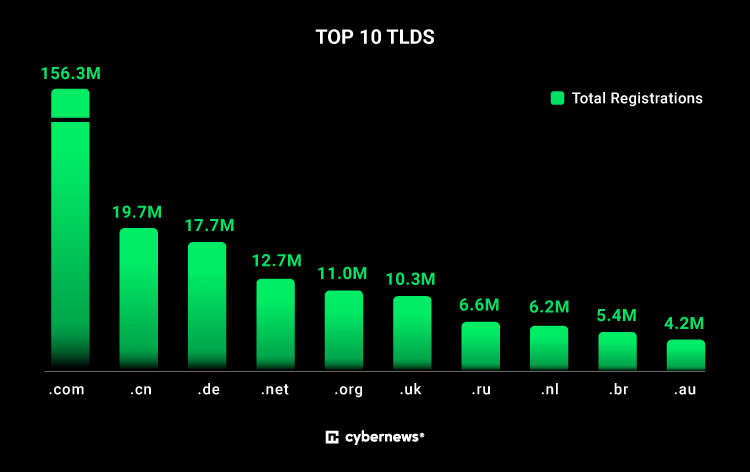
Originally intended for network-based businesses, .net has evolved into a credible alternative to .com—particularly in the tech world. If your business operates in digital services, platforms, or software, .net can support your positioning.
Why choose it:
- Still widely recognised and respected
- Strong association with technology and web services
- Greater availability than .com
- Can build a sleek, modern brand identity
Watch out for: Outside of tech, .net can feel confusing or off-brand as users might misinterpret what your business offers.
Pro Tips:
- Use it when it reinforces your niche. If you’re in web hosting, developer tools, or networking, .net adds thematic relevance that aligns with your offer.
- Avoid it for unrelated industries. If you’re selling physical products or running a local service, .net may mislead users and reduce trust.
- Check who owns the .com version. If a similarly named .com is active, it could siphon your traffic or confuse customers.
- Build clarity into your name. Pair .net with a clear, niche-relevant name to avoid ambiguity.
- Use it to support your tech-first branding. Showcase your digital expertise on the homepage to reinforce that .net means technology-driven, not second choice.
3. .org – The Community Anchor
Best for:
Non-profits, foundations, education hubs, open-source communities
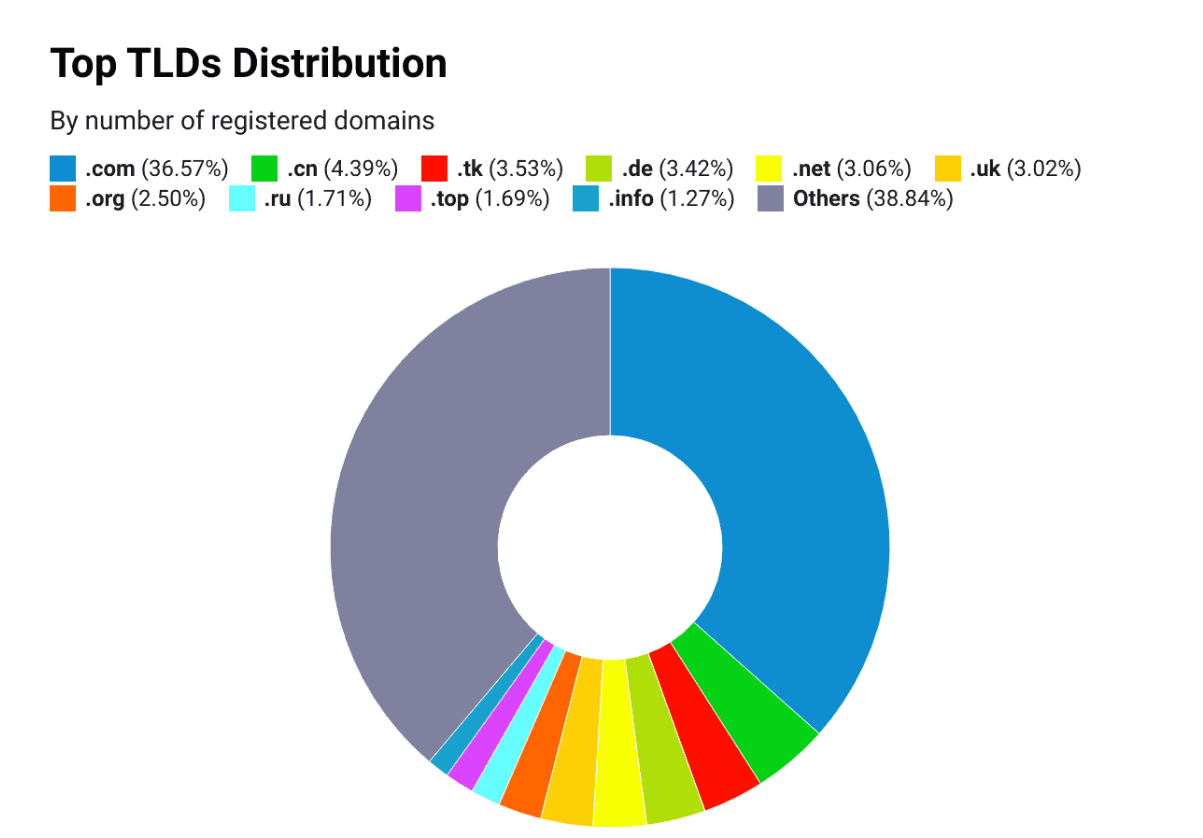
.org has long been associated with causes, public interest, and mission-driven work. It signals trust, transparency, and community focus, even for for-profit social ventures.
Why choose it:
- High trust and credibility
- Associated with knowledge-sharing and purpose-driven work
- Good availability of domain names
- Strong history and SEO recognition
Watch out for: It’s not ideal for ecommerce or overtly commercial brands as users don’t expect to make purchases on .org sites.
Pro Tips:
- Align with a purpose. Use .org if your organisation has a social mission, educational value, or operates as a non-profit.
- Own the narrative. Make your mission and values clear on your homepage and reinforce the trust associated with .org.
- Add credibility markers. Feature testimonials, affiliations, and certifications to support the authoritative tone a .org implies.
- Secure the .com if possible. Even if you build on .org, owning the .com helps prevent misdirection.
- Use it to unite a community. If your platform relies on member engagement or user-generated content, .org supports that sense of collaboration and openness.
4. .co – The Startup Favourite
Best for:
Modern startups, personal brands, global creatives
.co started as Colombia’s country code but has been rebranded globally as shorthand for “company.” It’s short, sleek, and gaining popularity among startups and solopreneurs.
Why choose it:
- Short and clean
- Feels innovative and modern
- Great alternative when the .com is taken
- Easy to brand and scale globally
Watch out for: People still default to typing .com, so you may lose traffic or need to work harder to reinforce your web address.
Pro Tips:
- Be ready to promote your URL. Because .co isn’t instinctive, be consistent in all branding to build familiarity.
- Secure the .com if possible. Or at least redirect any major typo versions of your domain to your .co.
- Use in bold, forward-thinking branding. Pair .co with strong visuals and messaging that appeal to innovation and newness.
- Ideal for early-stage launches. If you’re testing an MVP or brand concept, .co can be a stylish and flexible entry point.
- Watch for autocorrect issues. Some email or form validations may still mistake .co as an error—always test functionality.
5. .us – The Patriot’s Domain
Best for:
American brands, local services, civic organisations
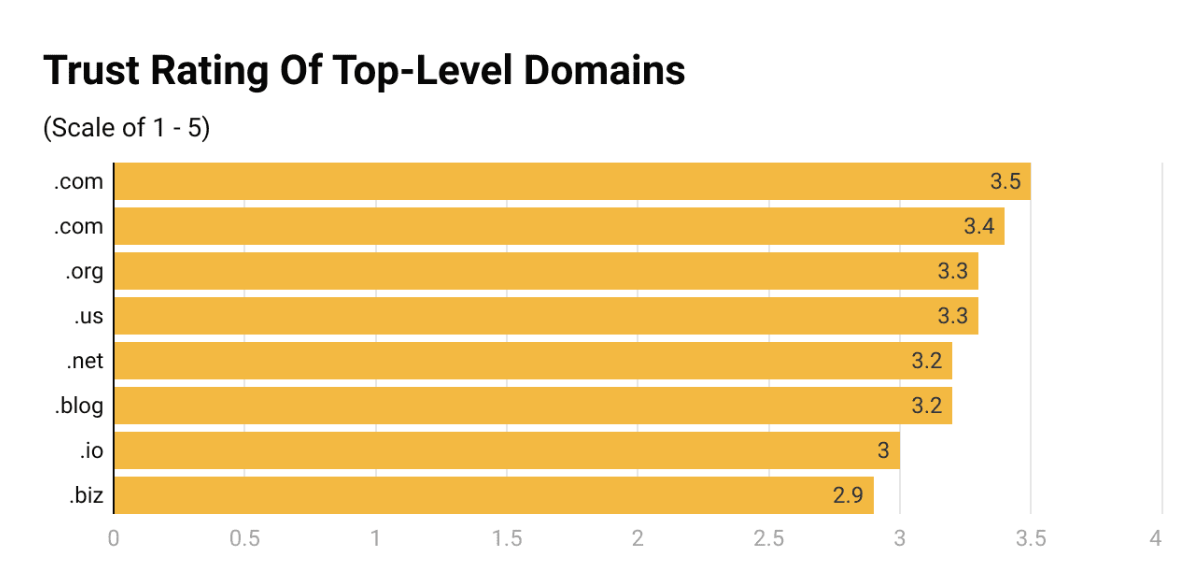
The .us extension is available to individuals and businesses with a presence in the United States. It can reinforce national identity, build trust with local customers, and support region-based SEO.
Why choose it:
- Signals American roots and legitimacy
- Good availability for names already taken in .com
- Suitable for government-adjacent, local, or civic platforms
- Great for campaigns with a patriotic edge
Watch out for: Restricted to U.S.-based individuals or businesses. Not ideal for global reach or neutral branding.
Pro Tips:
- Use it to highlight your U.S. focus. Emphasise American-made, local business values, or region-specific services.
- Tie it into your storytelling. Brands like vote.us and support.us integrate the domain into their identity—smart, memorable, and thematic.
- Don’t fake it. You must meet eligibility requirements to register a .us domain and ensure your details are valid as well as verifiable.
- Pair it with a U.S.-focused SEO strategy. Use American English, local maps, and U.S.-centric content to align with the domain.
- Avoid it for international growth. If you’re planning to expand globally, consider also securing .com or using .us for a separate U.S.-only site.
6. .au – Australia’s Digital Identity
Best for:
Australian businesses, brands with a local presence, or companies targeting the Australian market
.au is Australia’s official country code domain, signalling that a brand is based in or serving Australia. It builds local trust and improves regional search visibility.
Why choose it:
- Enhances credibility with Aussie audiences
- Boosts SEO in Australian search results
- Helps customers know you’re local
- Great for franchises or local branches of global companies
Watch out for: Eligibility restrictions apply—you must be an Australian citizen, resident, or organisation with a registered business number (ABN).
Pro Tips:
- Use it for SEO localisation. Search engines like Google favour .au domains for Australian queries and help you show up more often in local searches.
- Register all main variants. Consider securing .com.au and .net.au to protect your brand.
- Make your contact details clear. A .au domain implies local presence, so include a physical address, local phone number, and relevant business registration details.
- Avoid using it purely as a branding gimmick. If you’re not actually in or targeting Australia, using .au can backfire and raise trust issues.
Why Your Domain Extension Still Matters in 2025
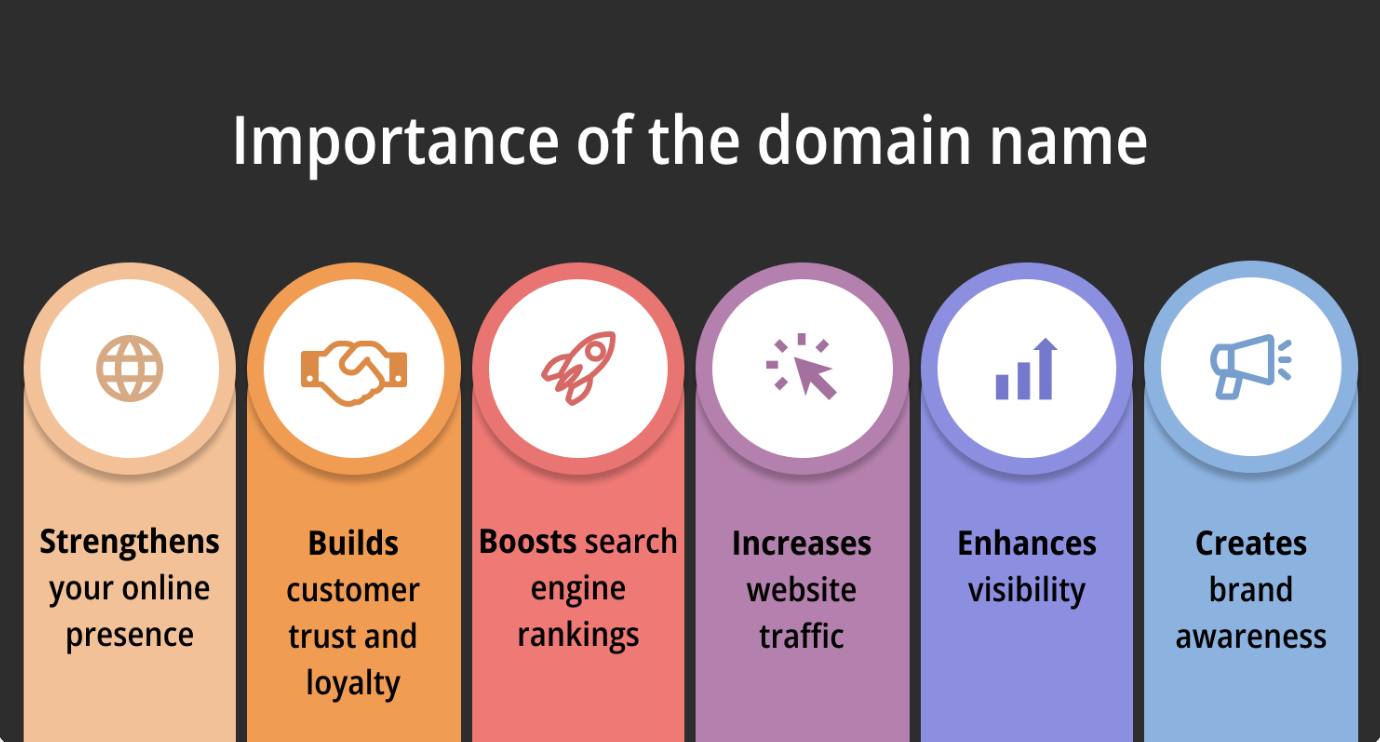
You might think a domain extension is just a formality, but the truth is it shapes how people see your business online. With hundreds of new options available today, your choice can influence everything from trust to search visibility.
Here’s what smart site owners consider when picking the right extension:
- Make Your Brand Clear and Memorable: Choose an extension that fits your business and speaks directly to your audience. If you’re in retail, .store tells visitors exactly what you do. Tech startups find .tech matches their innovation. Picking the right domain extension will help people remember you.
- Get Found Locally: If your customers are mostly in Australia, a .com.au domain signals you’re local. That can push your site higher in searches targeting Australian buyers and build confidence with shoppers who prefer local businesses.
- Build Instant Credibility: People still trust .com the most because it’s familiar and stable. If your audience spans borders, this extension adds legitimacy.
- Stay Future-Proof: The domain market keeps evolving. Choosing a flexible extension now means you won’t have to rebrand or lose traffic later. Think about where your business will be in five years and pick a domain that grows with you.
- Avoid Common Pitfalls: Some niche domain endings are still unfamiliar to most users. If your audience isn’t tech-savvy, using a rare extension could raise doubts. Stick with what your customers know or prepare to invest in educating them.
Top Domain Extensions: At a Glance
Here’s a snapshot of the top domain extensions:
Extension |
Type |
Best For |
Trust Level |
Pro Tips |
| .com | gTLD | Global businesses, ecommerce, B2B, general use | ⭐⭐⭐⭐⭐ | Prioritise this if available; still the most trusted and memorable. |
| .org | gTLD | Non-profits, education platforms, causes | ⭐⭐⭐⭐ | Use only if your mission aligns with non-commercial or community values. |
| .net | gTLD | Tech companies, infrastructure tools, hosting | ⭐⭐⭐ | Consider this if .com is taken and you’re in a technical field. |
| .info | gTLD | Resource hubs, directories, documentation sites | ⭐⭐ | Use for reference-based content; avoid if trust is a priority. |
| .biz | gTLD | Small businesses, online shops | ⭐ | Use with caution—it may appear less trustworthy. |
| .sg, .uk, .au, etc. | ccTLD | Local businesses, region-specific brands | ⭐⭐⭐⭐ | Great for local SEO; signals relevance in specific countries. |
| .edu | sTLD | Accredited educational institutions | ⭐⭐⭐⭐⭐ | Strict eligibility; instant trust for educational brands. |
| .gov | sTLD | Government websites | ⭐⭐⭐⭐⭐ | Highly restricted; ensures authority and legitimacy. |
| .tech | ngTLD | Startups, developers, SaaS companies | ⭐⭐⭐⭐ | Great for tech brands as it instantly signals innovation. |
How to Choose the Right Domain Extension for Your Business
Domain extensions help create a positive first impression, affect search visibility, and influence how people see your brand. Picking the wrong one can send traffic elsewhere and make your site look unreliable.
Here are ten practical tips to help you choose a domain extension that works for your business:
1. Match the Extension to Your Audience’s Location
If your customers are mostly local, use a country-specific extension like .sg to show you’re part of the community. It gives your business a local edge in search results and builds immediate trust with regional users. Don’t choose .com because it’s popular—choose what connects with the people you serve.
How-to: Run a location report on your traffic. If over 70% of it comes from one country, a ccTLD is likely your best move.
2. Pick What People Know
People trust what they recognise. Extensions like .com, .org, and .net still carry the most authority. If you’re building a brand from scratch, using one of these makes it easier to earn credibility from day one.
How-to: Type your domain idea into a browser. If the .com version is already in use or looks spammy, consider a reputable alternative like .co or .net before going for something trendy.
3. Don’t Skip Industry-Specific Options
Extensions like .tech, .design, or .store can signal exactly what you do. They’re clean, descriptive, and great for branding. Just make sure your customers won’t be confused by them.
How-to: Ask five people in your target market if they’d trust a site with your chosen extension. If even one says, “I’m not sure what that is,” look for a clearer option.
4. Use Your Extension as Part of the Brand
Smart businesses use their extension to finish their name. Think build with. tech or greenroom .studio. This works well for startups, creatives, and e-commerce. It keeps your URL short and adds personality.
How-to: Try pairing your brand or product name with functional extensions like .works, .shop, or .media and see if it forms a clean, memorable phrase.
5. Lock in the .com if You Can
Even if you use another extension for your main site, own the .com version. It protects your brand and prevents others from using it to mislead customers.
How-to: Register the .com as a redirect or defensive domain. Forward it to your live site or keep it parked.
6. Use ccTLDs for Local SEO Wins
Google uses domain extensions as a trust signal for geographic relevance. A .sg domain gives you a better shot at showing up in searches from Singapore. It’s not just about being local—it’s about being found.
How-to: Set up Google Search Console with geo-targeting enabled. Combine the ccTLD with localised content for stronger rankings.
7. Avoid Trendy Extensions You Can’t Explain
Extensions like .xyz, .ninja, or .guru may look cool, but they can backfire if your audience doesn’t get it. A confusing or unfamiliar domain name kills trust faster than a slow-loading site.
How-to: If you need to explain your extension when sharing your URL, skip it. Stick to what looks credible in your niche.
8. Keep Your Brand Consistent Across Extensions
Don’t use one name for your domain and a different one for your social handles or email. Inconsistent branding creates confusion and makes your business look scattered.
How-to: Use tools like Namechk to check domain availability and social usernames. Choose an extension that aligns all branding in one clean package.
9. Plan for Scale Before You Commit
Choose a domain extension that supports future growth. A local bakery using .sg might go international someday.
With the rise of new domain TLDs, you have more options than ever to secure a relevant and scalable web address. Think long-term before tying your identity to one region or format.
How-to: If expansion is part of your roadmap, register both the ccTLD and a global extension like .com or .online. Use the ccTLD now and transition later if needed.
10. Choose a Host That Understands Your Market
Your extension sets expectations—your hosting needs to back them up. If you’re using a .sg domain, work with a provider that supports regional uptime, local security, and fast performance in your market.
How-to: Check if your host offers region-specific optimisations, such as data centers in-country, SG-specific DNS support, or local customer service.
Build a Domain Strategy That Works Long-Term
Your domain extension is a core part of your online identity. The right choice builds trust, supports your brand story, and signals relevance to the right audience.
If you’re ready to take that step seriously, BigRock gives you the foundation to do it right. With a wide range of domain extensions, dependable hosting, and expert guidance, BigRock helps businesses create domain strategies that align with real-world goals.
Whether you’re going local or thinking global, our team is here to back you with secure, scalable solutions built for growth. Need help choosing the right extension? Connect with us now!
FAQs
What’s the difference between .com and .net, and which should I choose?
When deciding between in vs com, it’s important to understand their distinct uses and audience.
Meanwhile, .com is built for commercial use and is globally trusted. If you’re running a business, start with .com. .net is more technical in nature and better suited for networking, hosting, or infrastructure-based services. Choose based on how you want to be perceived.
Are industry-specific extensions like .tech or .store worth considering?
They are—if your business falls into a defined niche. .tech works well for developers, startups, and SaaS brands. .store is ideal for eCommerce sites. These extensions help clarify what you do right in the URL, but only if your audience recognises them.
Will using a domain extension other than .com affect my SEO?
Not directly. Google treats all domain extensions the same for ranking purposes. What matters is your site’s content, structure, and authority. That said, users still trust .com more, which can impact click-through rates.
Should I go for new domain TLDs even if the .com is already taken?
Only if the alternative is a clear, strong fit. Don’t force it. If the .com is unavailable, consider other meaningful options like .io, .co, or your industry-specific TLD. Make sure the new domain TLDs are easy to remember, easy to spell, and legally safe to use.
I run a business in Australia. Is a .com.au domain better than .com?
If your market is mainly Australian, yes. .com.au adds credibility locally and improves visibility in Australian search results. It also signals that your business is based in Australia, which helps with trust and conversions.
Are there any risks in using lesser-known domain extensions?
Some lesser-known TLDs can seem spammy or unfamiliar, and users may hesitate to click if they don’t recognise the extension. Stick to extensions that your audience understands unless you have a clear branding reason to go niche.
Should I register multiple extensions of my domain to protect my brand?
Yes. Owning your domain across major extensions (.com, .net, .co, etc.) prevents impersonation and protects your brand. Even if you only use one, redirect the others to your main site to avoid confusion or lost traffic.