Home » Products » Domains » Domain vs URL: What’s the Difference and Why It Matters for Your Website
| A domain is the web address of a site, for example, brand.com, while the URL is the complete name of a specific web resource, with or without the protocol, domain, path, and other parameters. Here is a guide on the differences between domain vs. URL and how both influence your brand credibility. |
With more than 370 million domain names registered globally in 2025, and websites building business credibility, it has become critical to strategise your digital basics.
For a layman, merging a domain with a URL might look harmless; yet for search engine optimisation, branding, and web design, it is a critical distinction.
If you are about to begin a website, you must understand the distinction between a domain vs. URL. Although they are not the same, they play fundamental roles in web surfing, SEO, and branding.
In this guide, we will cite their differences and explain how they affect your web strategy.
What Is a Domain?
A domain is your website’s digital identity. It is your business’s internet name – for example, if you have a clothing store, then DesignerStore.com can be your domain name.
Technically, it replaces numeric IP addresses with text that makes it easier for users to use the website. Characteristics of a domain name:
- Second-Level Domain is your custom name, for example, in brand.com – the SLD is “brand”
- A Top-Level Domain is the suffix or extension, which is .com, in the case above.
- Subdomain is a name that precedes the main domain; for instance, sale.brand.com, where “sale” is the subdomain.
Domains reflect business identity and get registered & renewed by registrars.
| Read More: How to Find the Perfect Domain Name for E-Commerce |
What is a URL?
A URL or Uniform Resource Locator is a full web address pointing to a specific page, file, or resource on the web. It contains more parts than a domain and provides complete navigation details to servers and browsers.
Parts of a URL:
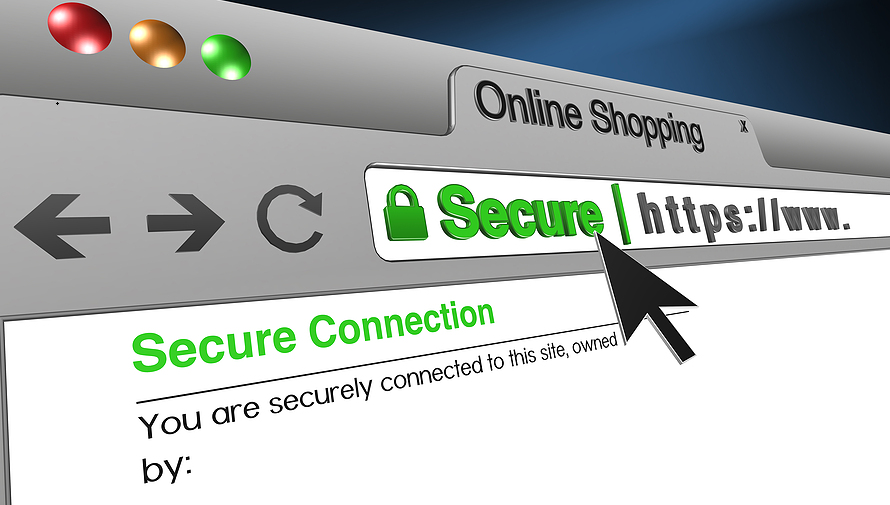
- Protocol which is either http:// or https:// (where http:// is unsecured and https:// is secured)
- Subdomain, which is www.
- Domain Name – As stated above example.com
- Path – For instance, DesignerBrand.com/products/formals
- Query Parameters and Fragment Identifiers -https://www.DesignerBrand.com/products/formals?style=anarkalis is an absolute URL.
| Read More: Understanding URLs: Structure, Types, and Creation |
Key Differences Between Domain vs URL
Let us understand the differences between a domain and a URL:
| Feature | Domain Name | URL |
| Definition | The name/address of a website | The full address of a specific resource on the web |
| Scope | Points to the entire website | Points to a specific page or file |
| Components | SLD + TLD | Protocol, domain, path, parameters, fragment |
| SEO Role | Affects branding, trust, and authority | Affects content hierarchy, keyword visibility, and tracking |
| Usage | For branding, email, and website | For internal linking, navigation, and analytics |
| Permanence | Registered and owned | Can change frequently based on site structure |
| Registration | Yes, through a domain registrar | No registration |
Why This Difference Matters for SEO and Web Performance
Domain Names Impact:
- Memorability – Simple-to-remember domains get more direct traffic.
- Trust Signals – Clean, professional-sounding domain names establish trust.
- Geotargeting – Country top-level domains (.in) help with local SEO.
URLs Impact:
- SEO is easier for search engines to crawl with descriptive URLs.
- User experience is enhanced with short URLs, which reduces bounce rates.
- Link Sharing – Simple-to-type URLs can be copied and pasted on social media.
How Domains and URLs Influence Brand Credibility
Domains vs URLs could be different in meaning and intent; however, both strategies work hand-in-hand to enhance user trust and brand reputation:
- Branding and Consistency – A branded domain is your business identity, while URLs signify brand clarity and consistency.
- Navigation and Site Structure – URLs simplify the hierarchy of content beneath a domain, making it easier for both search engines and users to navigate.
- Integration of Custom Email – Domain names support business email addresses and other forms of communication, including social media branding. URLs are kept for forming campaign landing pages.
- Campaign and Analytics Tracking – URL parameters enable tracking of traffic sources without altering the domain. This helps businesses to design niche campaigns while keeping a single stable domain.
Selecting the Perfect Domain Name & Designing SEO-Friendly URLs
Below are tips to make smart decisions based on domain naming and URL selection:.
Domain Name Selection Tips:
- Make it Short and Simple – Use 6–14 characters.
- Select the Appropriate Extension – .in is suitable for Indian businesses. For global reach, .com is still the best.
- Avoid Using Hyphens and Numbers – They can confuse users and lead to a high bounce rate.
- Use Relevant Keywords – Prioritise branding over discoverability.
- Verify Domain and Trademark Availability – Check the availability of domains.
- Allow Domain Privacy – Protect information from the WHOIS lookup database and avoid spam or fraud.
SEO-Friendly URL Building Tips:
- Use HTTPS, which is a secure URL, to enhance Google ranking.
- Include keywords and use lowercase, hyphens, and alpha-numeric characters for simplicity.
- URLs should be short but descriptive in length.
- Remember that hyphens are used as word breakers by Google; underscores don’t signify the same.
- Use the same approach in URL paths, especially on eCommerce or blog-type websites.
- Use canonical URLs to avoid duplicate content issues, especially when using variant versions of a single page or tracking URLs.
Domain vs URL: Distinct but Influential
Every business must understand the differences between a domain vs URL. It is crucial to know that both terms have distinct meanings but share a common purpose: to ensure a trustworthy and SEO-enriched web presence.
Your domain is a brand’s web name, while a URL is its identifier that directs visitors and search engines to specific pages on a website. Both of them build your reputation and online presence.
For domain name or URL-related concerns or queries, contact the experts at BigRock. Choose secure, scalable hosting, and get DNS management, domain privacy, email, and more, all from one place.
Sign up at BigRock and power your online presence today.