Home » Products » Domains » Domain Acquisition Strategy: How to Find, Evaluate, and Secure the Perfect Domain Name
| With millions of domains already taken, securing a memorable and SEO-friendly name requires a clear strategy. This five-step guide helps Indian businesses confidently evaluate, purchase, and launch domains, while avoiding legal and branding pitfalls. |
A study showed internet users are 39-200% more likely to click a URL they perceive as trustworthy than one that feels suspicious. Your domain name is therefore more than an address; it is a credibility signal, an SEO asset, and a brand memory hook.
Yet with 364 million domains already registered worldwide, good names disappear fast.
This guide introduces a five-step domain acquisition strategy designed for SMEs, agencies, and tech-savvy teams in India.
Follow it to shortlist strong options, evaluate domain value accurately, negotiate confidently, and launch without legal or technical hiccups.
Step 1: Define Objectives & Shortlist Names
Know Your Audience, Brand Voice & Expansion Plans
The first step in your domain acquisition strategy is to obtain an extension that communicates your scope. Country-specific .in or .co.in domains instantly signal an India focus. If regional growth or exports are on your roadmap, also secure a matching .com or a relevant new gTLD such as .store or .tech.
Brainstorm & Filter Keywords
Combine brand words with high-intent keywords using ChatGPT prompts, Google Trends, and local-language terms that resonate with Hindi, Tamil, or Bengali speakers. Short names win, as data shows that traffic drops roughly 2% for every extra character beyond seven.
Budgeting & Feasibility Checkpoints
- A brand-new .in typically costs around more than ₹500 per year, while premium resales can climb past ₹2 lakh.
- Set a strict “walk-away” ceiling to avoid auction fever.
Step 2: Availability & Preliminary Screening
Instant Availability Search Tools
Run quick WHOIS lookups as the second step in your domain acquisition strategy. Several domain search tools let you check dozens of variants in seconds.
Trademark & Legal Checks (IP India Portal)
Avoid future conflicts by searching the IP India database and global trademark directories.
Competitor & Typo-Squat Scan
Audit close spellings and common typos with a generator, then inspect blacklists for phishing reports. Tools like Ahrefs’ competing domains feature reveal similar names that are already ranking in Google.
Step 3: Evaluate Domain Value Before You Commit
Quantitative Valuation Metrics
- Exact-match search volume for core keywords.
- Backlink profile strength: pages ranking first on Google own 3.8× more backlinks than those lower down.
- Domain age via the Wayback Machine because older names often carry authority.
- Comparable sales records on DNJournal or other sales trackers.
| Also Read: What is a Premium Domain Name – Unlocking the Value and Benefits |
Qualitative Factors
Check pronounceability across Indian languages, social-media handle availability, and headroom for future product pivots.
Free & Paid Appraisal Tools
Automated estimators provide ballpark numbers, but a specialised broker’s insight usually reflects current market demand more accurately.
Found a high-potential name? Check instant availability before competitors do to create a strong domain acquisition strategy.
Step 4: Negotiation & Purchase Tactics to Buy Premium Domains
Contacting Owners: Direct, Broker, or Marketplace
You can:
- Email the registrant listed in WHOIS.
- Use a specialised domain marketplace that holds the name in escrow.
- Hire an independent broker who charges approximately 10–15% of the final price.
Negotiation Scripts & Psychology
Start with a reasonable anchor offer, build urgency by outlining your marketing timeline, and sweeten the deal by bundling assets (for example, the matching Instagram handle).
Example:
Buyer: “We plan to launch in four weeks and this domain is our first choice. We can offer ₹1.2 lakh today and finalise transfer within 48 hours.”
Seller: “The current ask is ₹1.8 lakh.”
Buyer: “If we meet in the middle at ₹1.5 lakh, we will also purchase the Twitter handle from you, saving an extra negotiation for both sides.”
Secure Payment & Transfer Best Practices
Always insist on an escrow service, obtain the authorisation (EPP) code, and confirm GST implications for cross-state purchases. For Indian buyers, remember that the .in extension follows the INDRP policy, India’s local equivalent of UDRP.
Step 5: Secure, Configure & Launch Your New Domain
Registrar Transfer & DNS Setup Checklist
- Change nameservers to your hosting provider.
- Enable DNSSEC and two-factor authentication.
- Turn on auto-renew and calendar reminders.
Brand Protection Moves
Register close variants, common misspellings, and geo-extensions in bulk to block counterfeiters.
Sync Social Handles & Update Assets
Consistent naming across web and social media increases brand recall, which in turn improves conversion rates by 33%. So, you should consider updating your email signatures, invoices, and marketing collateral.
Post-Launch Monitoring
Use Google Search Console to track indexing, uptime alerts for availability, and trademark watch services to flag infringements.
| Also Read: How to Register a .site Domain and Launch Your Website |
Common Pitfalls for a Domain Acquisition Strategy
Here are some common mistakes you need to avoid for your domain acquisition strategy:
- Overlooking hidden renewal costs that are far higher than the first-year offer.
- Ignoring future trademark conflicts that force a costly rebrand.
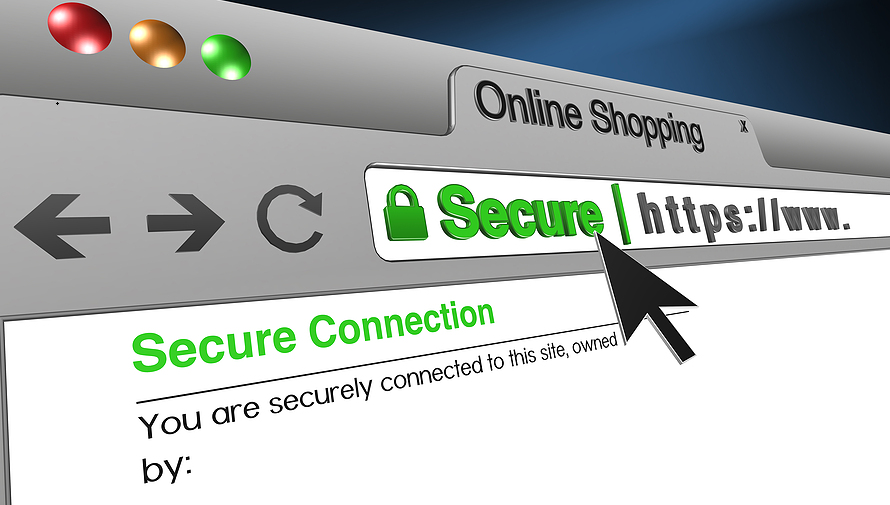
- Launching without SSL/HTTPS, hurting both trust and SEO.
- Delaying 301 redirects from an old domain causes rankings and traffic to plummet during migration.
Key Takeaways
A disciplined domain acquisition strategy prevents overpaying and accelerates go-to-market. Legal and technical due diligence shields you from downtime. Early registration of your variants, plus ongoing monitoring, secures long-term brand equity.
With BigRock, you can migrate your domain seamlessly, ensuring that you do not loose any data. The platform ensures that you get a zero-risk platform for your migration needs.
Want to learn more? Sign up today!