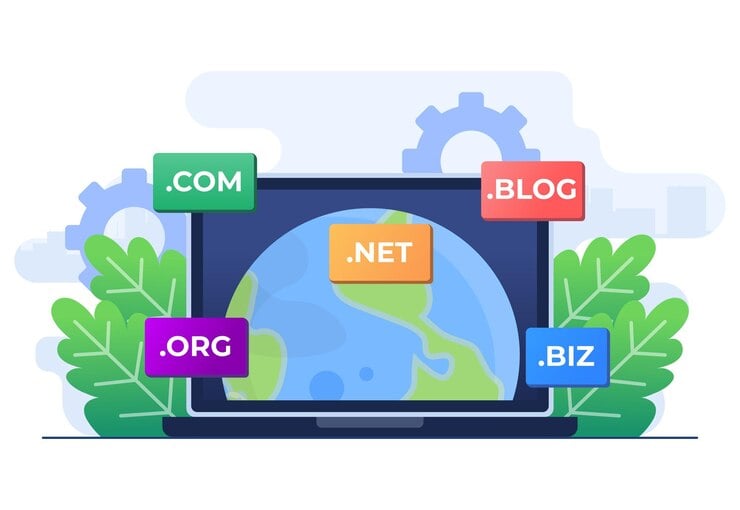
| Domain booking is the technical process of searching domain availability, registering a name through an accredited registrar, and configuring DNS, security, and renewal settings to establish and maintain control of a web identity. |
You finally land on the perfect business name, design the logo and print the business cards. Then you discover the matching domain was snapped up yesterday. A squatter is already listing it at ten times the normal price, siphoning the traffic and trust that should be yours.
Without that exact domain, customer emails can bounce, ad clicks leak to look-alike sites and every correction you make chips away at credibility. What feels like a small oversight can snowball into legal wrangling, expensive rebranding or months of stalled growth.
This guide flips that anxiety on its head. You will see a clear, step-by-step route for domain booking, from name brainstorming to live DNS, so you never lose your digital identity again.
Registrar Vs Registry: Who Does What And Why It Matters
A domain lives in a global database managed by a registry. A registrar is the retail interface that lets you “lease” space in that database for one to ten years at a time.
Think of the registry as the national land office and the registrar as the local estate agent.
Because this is a renewable lease, not permanent ownership, renewals and transfers sit at the registrar level.
Choose wisely and gain easy DNS tools, WHOIS privacy, and responsive support. Choose a discount reseller, and you might encounter hidden transfer fees or slow support.
Before committing, check:
- Clear renewal pricing and reminders
- Free or affordable WHOIS privacy
- 24 × 7 support with real humans
- Transfer-out policy without punitive fees
The registrar you select today governs control, cost and security for the life of your domain booking.
How to Choose the Right Domain Name
A strategic name balances branding, memorability and flexibility. Start with clarity: a domain must be easy to speak aloud, type on mobile and recall days later.
Naming Best Practices
- Short, brand-aligned names stick in memory better than keyword-stuffed strings. “FinelyBrewed.com” is tidier than “Best-Artisanal-Coffee-Shop-UK.com”.
- Keep character count low, avoid ambiguous spelling and steer clear of doubled letters that hide typos.
- Hyphens are acceptable when they genuinely improve readability (“data-driven.io”), but limit them to one. Numbers can work for brands already using numerals (“Studio54.app”), but they can be confusing when the audience cannot tell whether it’s “five” or “5.”
Choosing The Right TLD
Generic TLDs such as .com or .net remain universal signposts of legitimacy, while newer gTLDs (.tech, .studio) can underline niche expertise.
Country codes (.uk, .de) boost local credibility and may help search engines geotarget users. Many businesses register both .com and their primary ccTLD, then redirect traffic for consistency.
Brand Protection Strategy
Buy common misspellings, plural forms and campaign-specific variants to neutralise phishing attempts and typo-traffic leaks. Lock them all into one registrar account and forward everything to your primary site. A modest upfront spend on protection is cheaper than litigating against an imitator later.
Step-By-Step Domain Booking Workflow
A clean workflow prevents launch-day headaches and keeps projects on schedule.
Search And Availability Checks
Begin with a bulk search tool to scan your shortlist across multiple TLDs and spot trademark conflicts. Always inspect the current WHOIS record for similar names to avoid accidental infringement.
Registrar Selection And Policy Review
Compare base price, renewal price, WHOIS privacy inclusion, support channels and accepted payment methods. Confirm that the registrar supports all TLDs on your wish list and offers straightforward transfer-out procedures.
The Registration Process
Select the registration term (one year is fine for tests; three-plus years signals commitment), enter real contact data, enable privacy where permitted and turn on domain lock.
Verify billing details, read the transfer policy and confirm automatic renewal so an expired card never costs you the name.
Nameservers, DNS Records And Hosting Setup
Point your domain to either registrar-hosted nameservers or your hosting provider’s nameservers. Add A and AAAA records for the website, MX for email and TXT records for SPF, DKIM and site-verification tags.
Expect global DNS propagation to take 48 hours or less; test with an external DNS checker.
Go-Live Checks
Before announcing the launch, visit the site from different networks, send test emails, validate SSL and run SPF/DKIM alignment tests. Catching a typo now is far cheaper than patching it under customer pressure.
Security, Privacy And Operational Best Practices
Securing the registrar account is as important as securing the website.
Account And Registrar-Level Security
Use long, unique passwords, enable two-factor authentication (2FA) and add a recovery contact. Enable registrar locks to prevent unauthorised transfers.
WHOIS Privacy And Legal Trade-Offs
WHOIS privacy masks your personal address, phone and email from public look-ups. Some ccTLDs require public data; confirm the rules before relying on privacy services. Even with privacy enabled, keep official contact details accurate; registrars will use them for critical notices.
Renewals, Monitoring And Incident Response
Activate auto-renew, choose multi-year registration where budgets allow and create calendar reminders. Audit your domain list quarterly, confirm locks are active and draft a fast-response plan for hijacking or DNS compromise.
| Pro Tip: Manage all company domains in a single account with role-based access. It will help you keep ownership clear and avoid missed renewals. |
Checklist Before You Hit Register
Follow this quick checklist to confirm your domain is available, compliant, and ready for a smooth launch:
- Confirm exact spelling, pronunciation and chosen TLD.
- Review registrar privacy, lock, transfer and renewal policies.
- Prepare accurate WHOIS contact details and a valid payment method.
- Decide on nameserver host and gather DNS records for web and email.
- Enable auto-renew and select the registration term.
- Tag or label domains by project or campaign for easier audits later.
Secure Your Domain Early and Build on It with Confidence
Choosing and securing a domain is more than a technical tick-box; it is the foundation of brand trust, email reliability and future growth. By following a deliberate naming strategy, verifying registrar policies and locking down security from day one, you sidestep costly reclaim battles and keep customers flowing to the right place.
Ready to act? At BigRock, you can search, secure, and manage your domain in one place with transparent pricing, built-in protection, and tools that scale as your business grows. Register early, lock it down properly, and turn your domain into a long-term digital asset rather than a recurring risk.